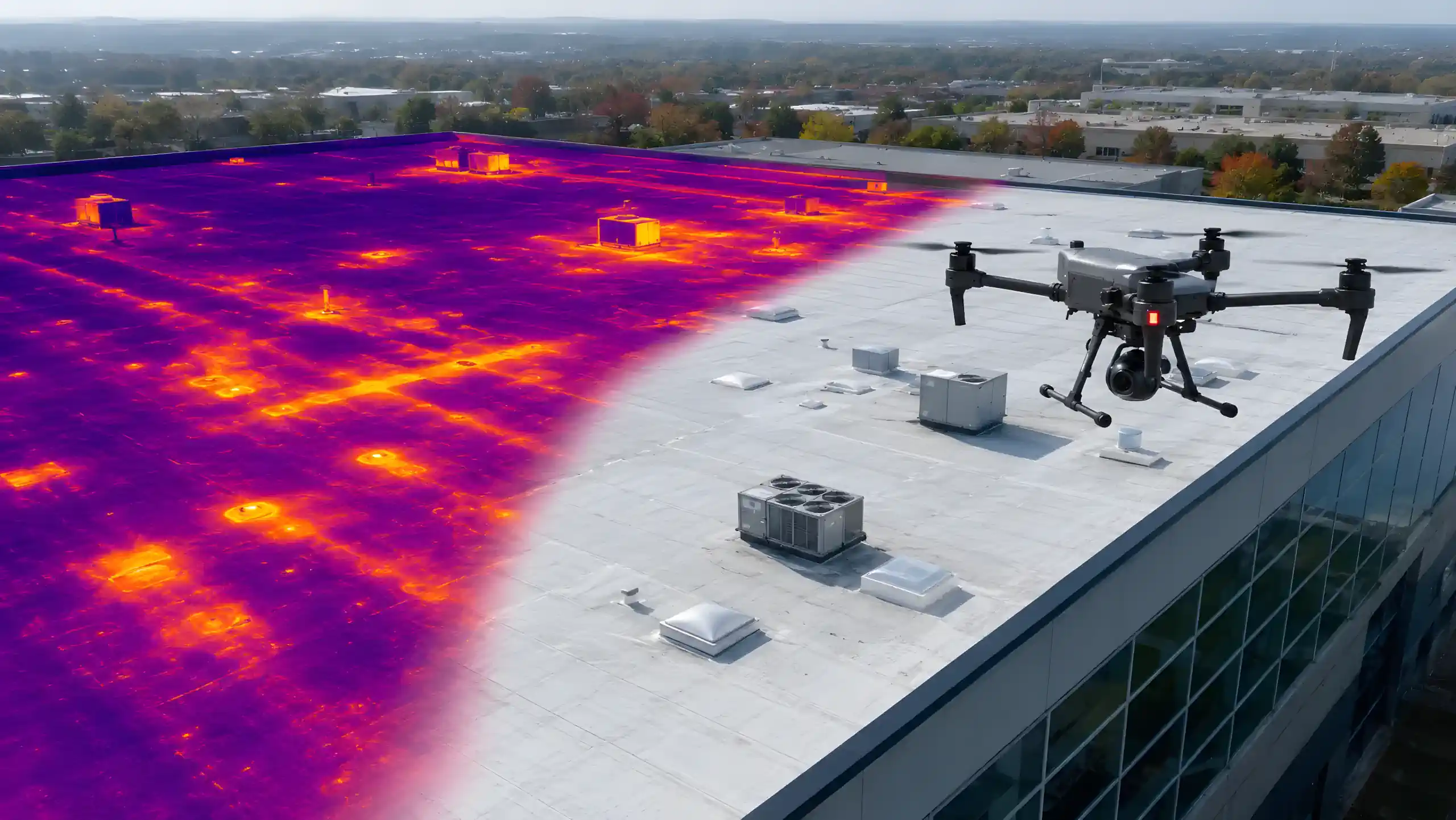
Drone with Thermal Camera for Professional Use
Compare professional drone systems with thermal cameras for inspection work, radiometric temperature measurement, RGB documentation, and stand-off inspection. Explore NDAA and Commercial configurations or use the system selector.
Ready-to-Deploy
Verified Specifications
U.S. Support
NDAA & Commercial Options
Select the Right Drone System
Describe what you need the drone system to do, or use our guided selector.
Loading selector...
AI-assisted, guided or technical selection
THERMAL
INSPECTIONS
HEAT ANOMALY DETECTIONTRACKING
TEMPERATURE MEASUREMENTSINSPECTIONS
HEAT LOSS DETECTIONMEASUREMENTS
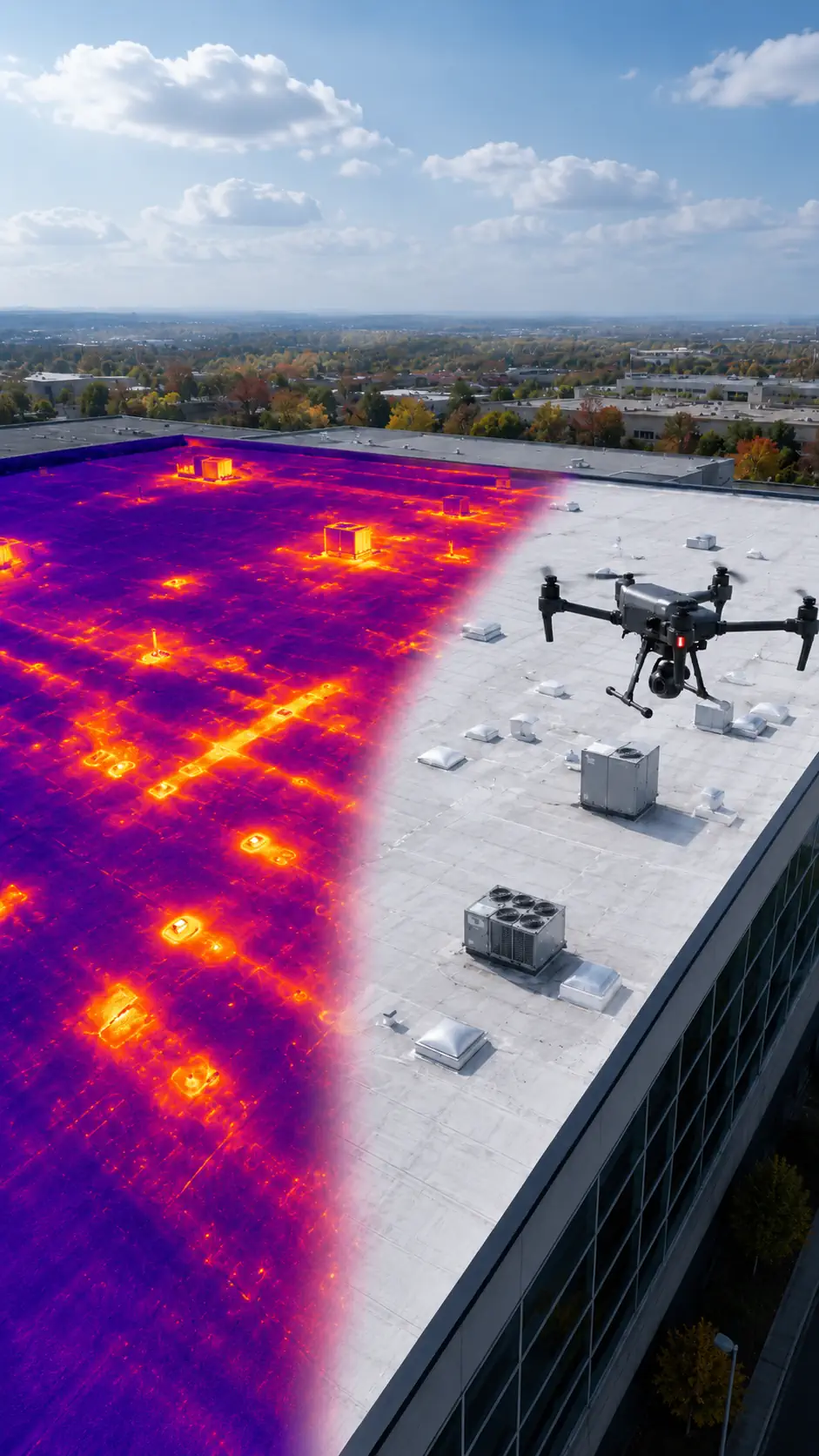
Drone with Thermal Camera for Professional Use
Compare professional drone systems with thermal cameras for inspection work, radiometric temperature measurement, RGB documentation, and stand-off inspection. Explore NDAA and Commercial configurations or use the system selector.
Ready-to-Deploy
Verified Specifications
U.S. Support
NDAA & Commercial Options
Select the Right Drone System
Describe what you need the drone system to do, or use our guided selector.
Loading selector...
AI-assisted, guided or technical selection
THERMAL
INSPECTIONS
HEAT ANOMALY DETECTIONTRACKING
TEMPERATURE MEASUREMENTSINSPECTIONS
HEAT LOSS DETECTIONMEASUREMENTS
On this page:
NDAA Solutions
Commercial Solutions
Types of work
Software
Overview
FAQ
NDAA-COMPLIANT THERMAL DRONE SYSTEMS
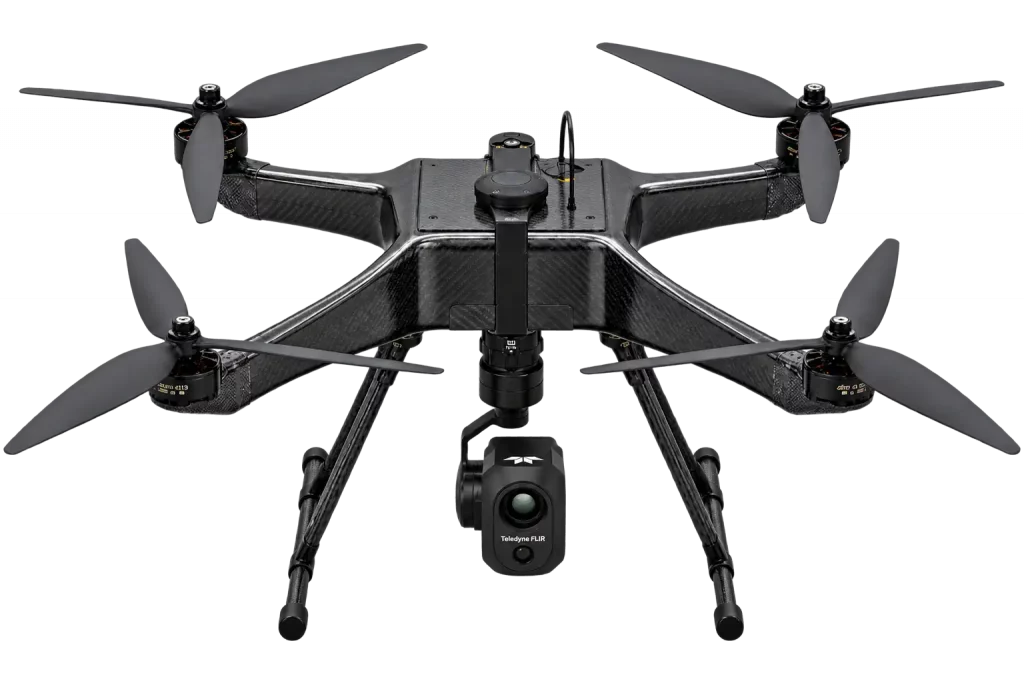 ✓ VERIFIED SOLUTION
- 35 minFlight Time
- 6 miOperating Range
- 64 MPRGB Resolution
- 640 × 512Thermal Resolution
- YesRadiometric
From $26,490
View System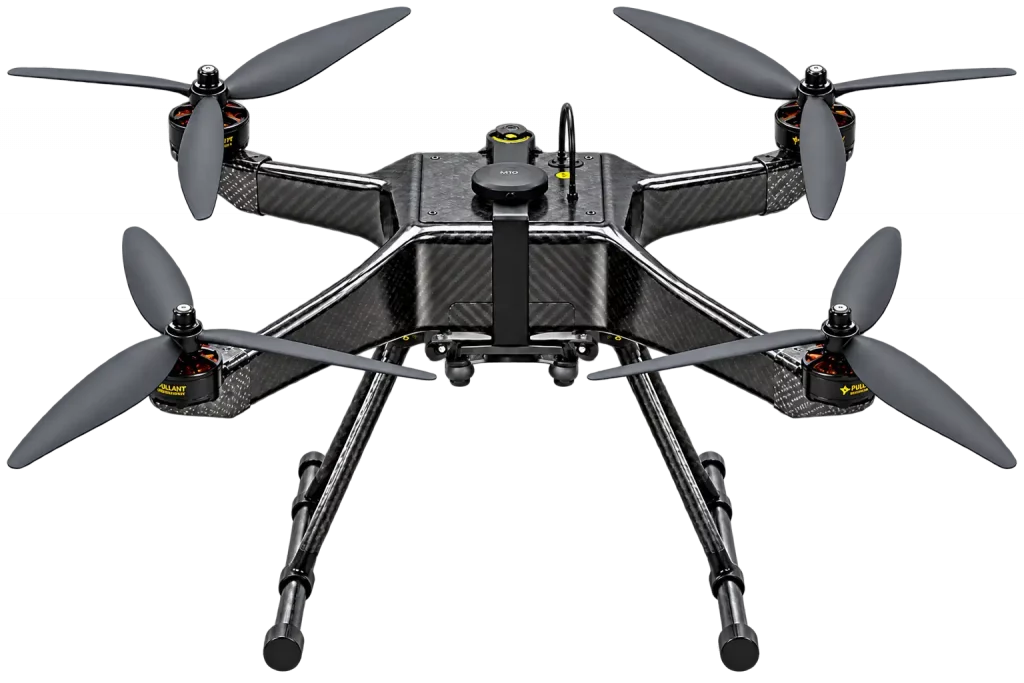
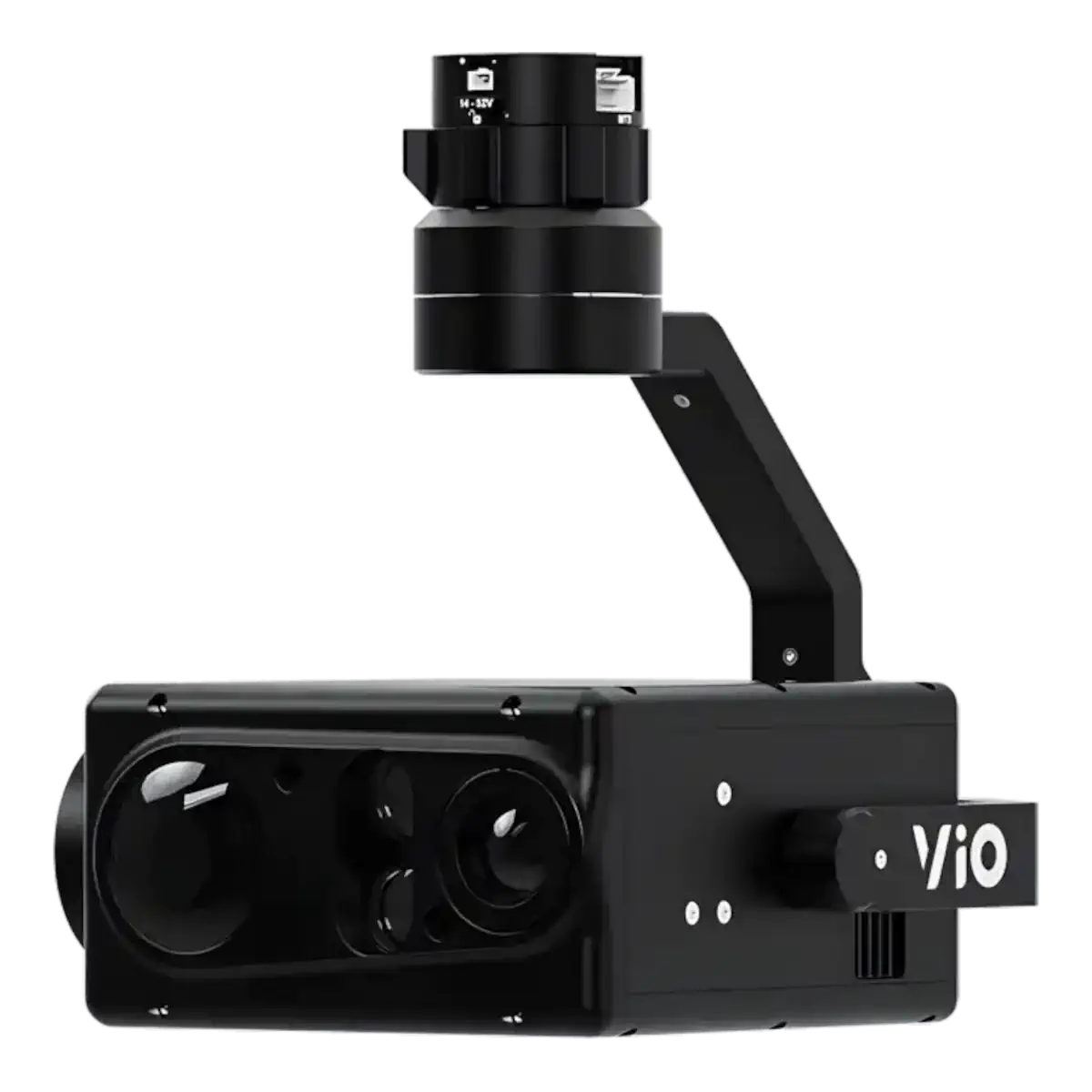
- 35 minFlight Time
- 3.5 miOperating Range
- 8.51 MP still; 3840x2160 4K videoRGB Resolution
- 20×Optical Zoom
- 640 × 512Thermal Resolution
- YesRadiometric
From $33,599
View SystemCOMMERCIAL THERMAL DRONE SYSTEMS
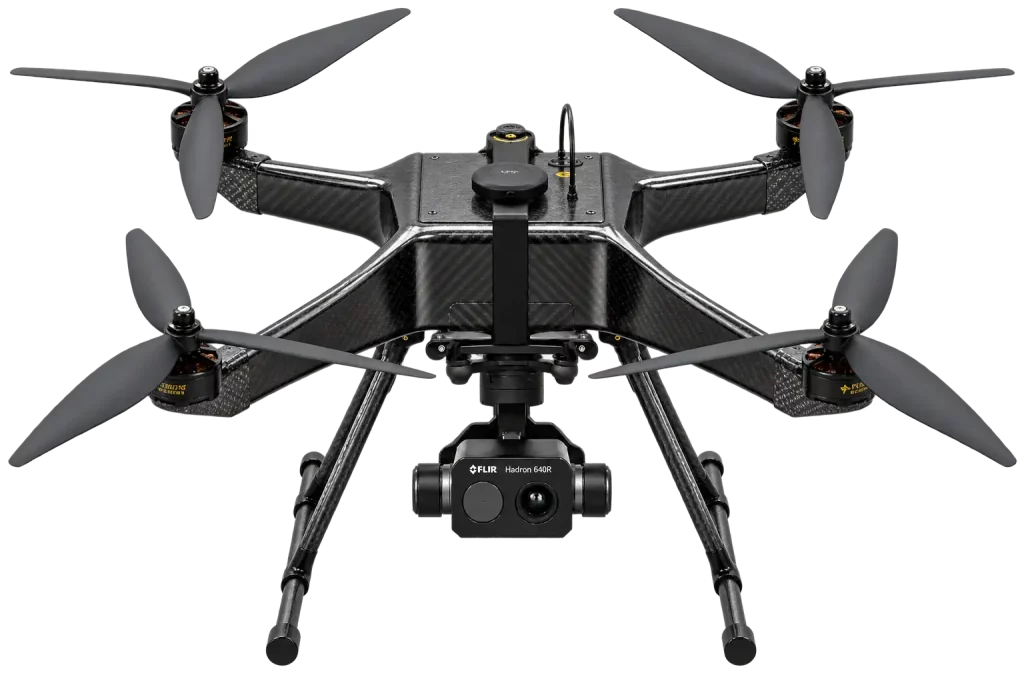 ✓ VERIFIED SOLUTION
Kinetic Analytics
Raven Thermal Inspection System
- 35 minFlight Time
- 6 miOperating Range
- 8 MPRGB Resolution
- 640 × 512Thermal Resolution
- YesRadiometric
From $8,490
View SystemKinetic Analytics
Raven UAV Platform
- 35 minFlight Time
- 3.5 miOperating Range
- 8.51 MP still; 3840x2160 4K videoRGB Resolution
- 20×Optical Zoom
- 640 × 512Thermal Resolution
- YesRadiometric
From $18,599
View SystemChoosing a Drone with Thermal Camera
A practical selection process starts with the required inspection result.
1. DEFINE THE TARGET
Identify what must be inspected and the smallest relevant feature.
2. DEFINE THE THERMAL REQUIREMENT
Determine whether you need relative anomaly detection or actual temperature measurements.
3. DEFINE THE INSPECTION DISTANCE
Establish how close the aircraft can safely operate.
4. SELECT THE CAMERA
Match thermal resolution, lens, radiometry, RGB imaging, and zoom to the target.
5. SELECT THE AIRCRAFT
Confirm payload capacity, endurance, operating range, wind performance, and compatibility.
6. CONFIRM THE DATA WORKFLOW
Verify that thermal and visible data can be captured, reviewed, analyzed, exported, and reported in the required format.
7. COMPARE COMPLETE CONFIGURATIONS
Compare systems based on the complete inspection workflow rather than one aircraft or camera specification.
What Is a Drone with Thermal Camera?
A drone with thermal camera combines an unmanned aircraft with an infrared sensor capable of detecting thermal radiation from surfaces, structures, equipment, and other targets.
Professional configurations may use a dedicated infrared payload or a multi-sensor camera that combines thermal and visible RGB imaging in the same stabilized unit.
The required camera configuration depends on the result the operator needs to obtain.
A system used to locate large temperature anomalies may not need the same sensor, lens, or working distance as a system used to inspect small electrical components or collect measurable temperatures.
The complete system therefore matters more than one specification.
Camera resolution, lens, radiometric capability, RGB imaging, stabilization, aircraft endurance, inspection distance, software, and data compatibility all influence what can actually be identified after the flight.
Drone with Infrared Camera and RGB Imaging
A drone with infrared camera is often configured with a visible RGB camera as well.
The two sensors provide different information.
The infrared sensor shows temperature patterns and thermal contrast.
The RGB camera shows visible surface condition, component identity, markings, damage, and other physical details.
Using both can make inspection findings easier to verify and document.
For example, a hot area detected in the infrared image can be compared with the corresponding visible image to determine whether it is associated with an electrical connector, solar module, roof feature, mechanical component, pipe, cable, or another asset.
For professional inspection work, the RGB camera should therefore be evaluated together with the infrared sensor rather than treated as an unrelated secondary feature.
Infra Red Drone Camera Resolution
An infra red drone must provide enough detector resolution for the target being inspected.
Thermal resolution determines how many infrared detector pixels are available to represent the scene.
More pixels can provide more useful detail, but resolution alone does not determine whether the camera can identify the required feature.
The final result also depends on:
- target size;
- inspection distance;
- lens field of view;
- viewing angle;
- focus;
- atmospheric conditions;
- thermal contrast;
- surface properties.
A thermal sensor that can detect a large hot object from a long distance may still be unable to resolve a small electrical component or localized defect from that same distance.
The camera must therefore be selected around the smallest target that needs to be identified.
Ready-to-Deploy Drone with Thermal Camera Systems
A professional drone with thermal camera should provide a compatible combination of aircraft, infrared imaging, visible imaging, payload control, software, and supporting hardware.
A complete configuration may include:
- aircraft platform;
- thermal camera or EO/IR payload;
- RGB camera;
- stabilized gimbal;
- controller or ground station;
- batteries;
- charger;
- payload mounting hardware;
- camera control;
- compatible software;
- setup and testing;
- documentation;
- training and support.
Compare available configurations based on the data you need to collect, the distance from which the target must be inspected, required thermal and RGB detail, radiometric capability, aircraft performance, and complete system price.
What Determines the Right Thermal Drone Configuration?
Start with the inspection result, target size and working distance. The ircraft and camera should then be selected as one complete system.
Need actual temperature measurements?
Saved thermal data must support temperature analysis after flight
Radiometric thermal
Inspecting small targets or working from farther away?
Small targets need to occupy enough pixels in the thermal image.
Higher thermal resolution + lens matched to working distance
Need to identify the exact component from a safe distance?
Thermal shows the anomaly; RGB helps identify the exact component.
RGB optical zoom / EO/IR
Need different cameras or payloads for different jobs?
A fixed payload can limit future inspection configurations.
Modular payload platform
Is NDAA compliance required?
Procurement requirements may exclude some Commercial configurations.
Verified NDAA configuration
Select the Right Drone System
Describe what you need the drone system to do, or use our guided selector.
Loading selector...
Use AI-assisted selection, a guided questionnaire, or technical filters.
Choosing a Thermal Camera Configuration by Inspection Task
The right drone with thermal camera depends on the target size, required working distance, whether temperature measurement is needed, and how much visible RGB detail must be captured alongside the infrared image.
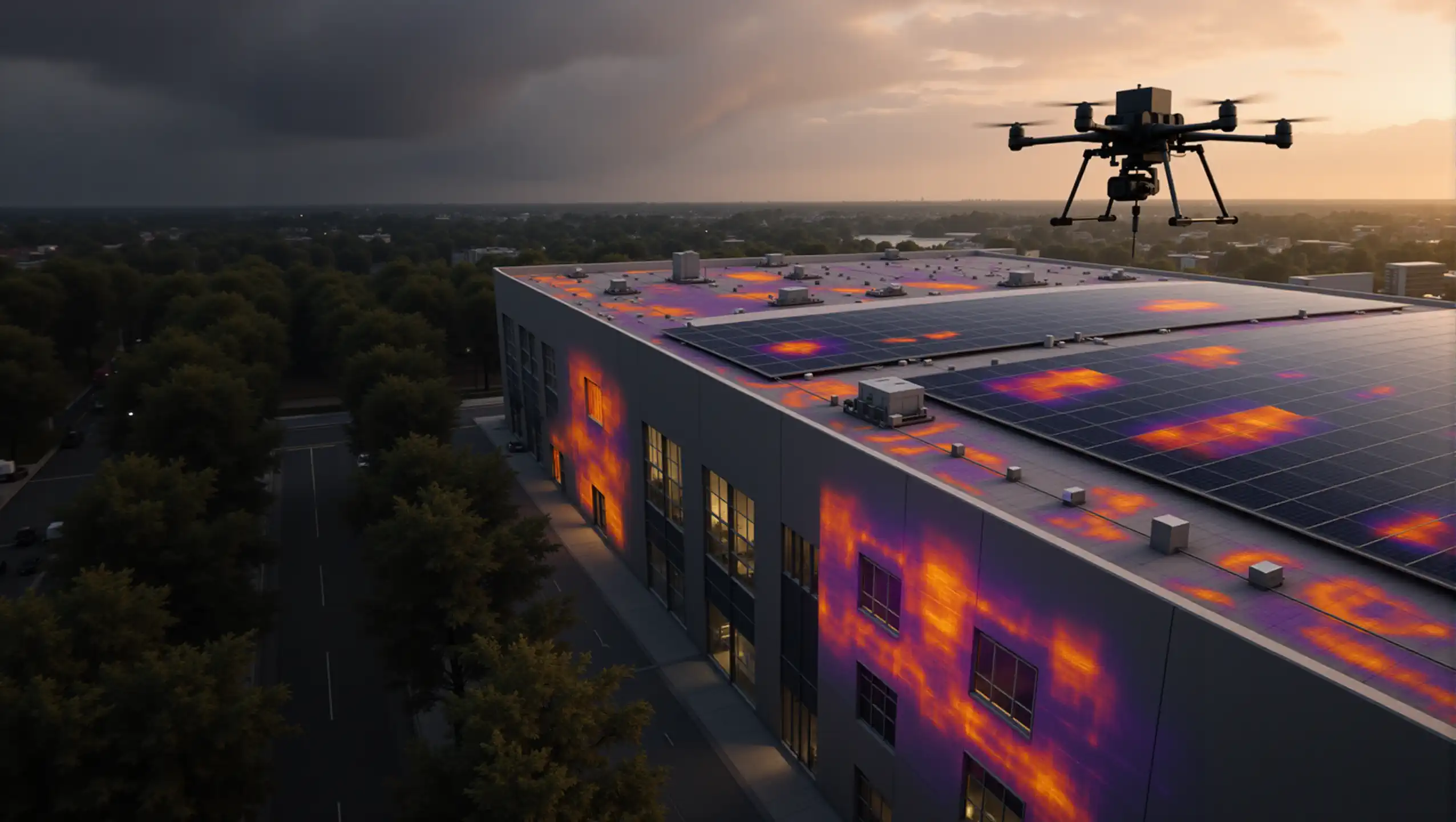
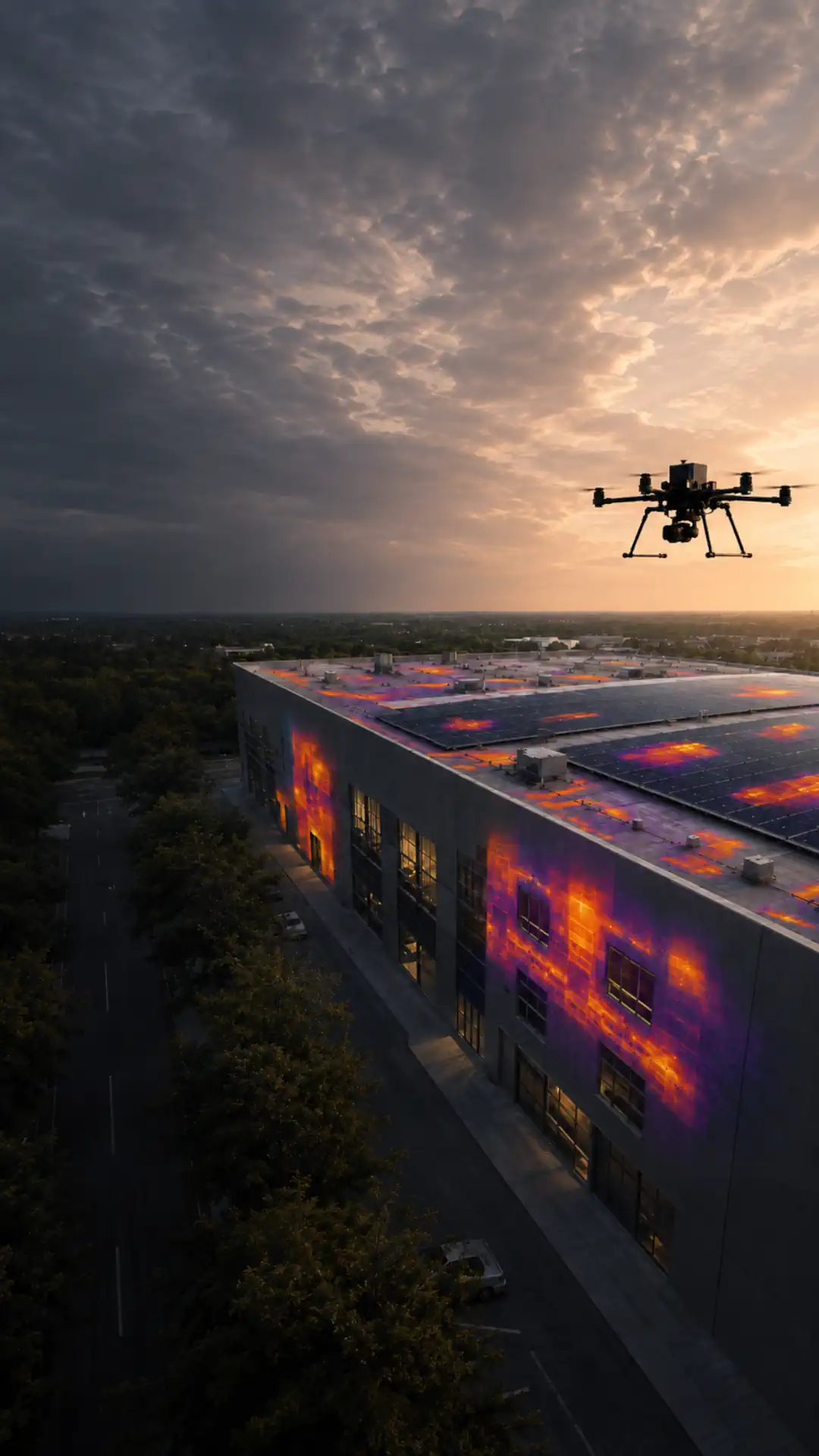
ROOF INSPECTIONS
For roof work, a wide thermal field of view can help cover large surfaces efficiently, while an RGB camera provides visual confirmation of seams, penetrations, membrane damage, and other visible conditions.
If the objective includes temperature measurement or moisture-related thermal analysis, radiometric capability may be required.
SOLAR PANEL INSPECTIONS
Solar inspection typically benefits from a radiometric thermal camera combined with RGB imaging.
The thermal sensor can identify abnormal temperature patterns, while the visible camera helps locate the exact module, string, connector, or physical defect associated with the finding.
For large solar farms, camera resolution, flight altitude, field of view, and repeatable capture become especially important.
BUILDING AND FACADE INSPECTIONS
Building inspections may require a wider thermal view for walls and roof areas together with sufficient RGB resolution to document windows, joints, insulation defects, facade damage, and other visible features.
Where the aircraft must remain farther from the structure, RGB zoom or a narrower thermal field of view may provide more useful detail.
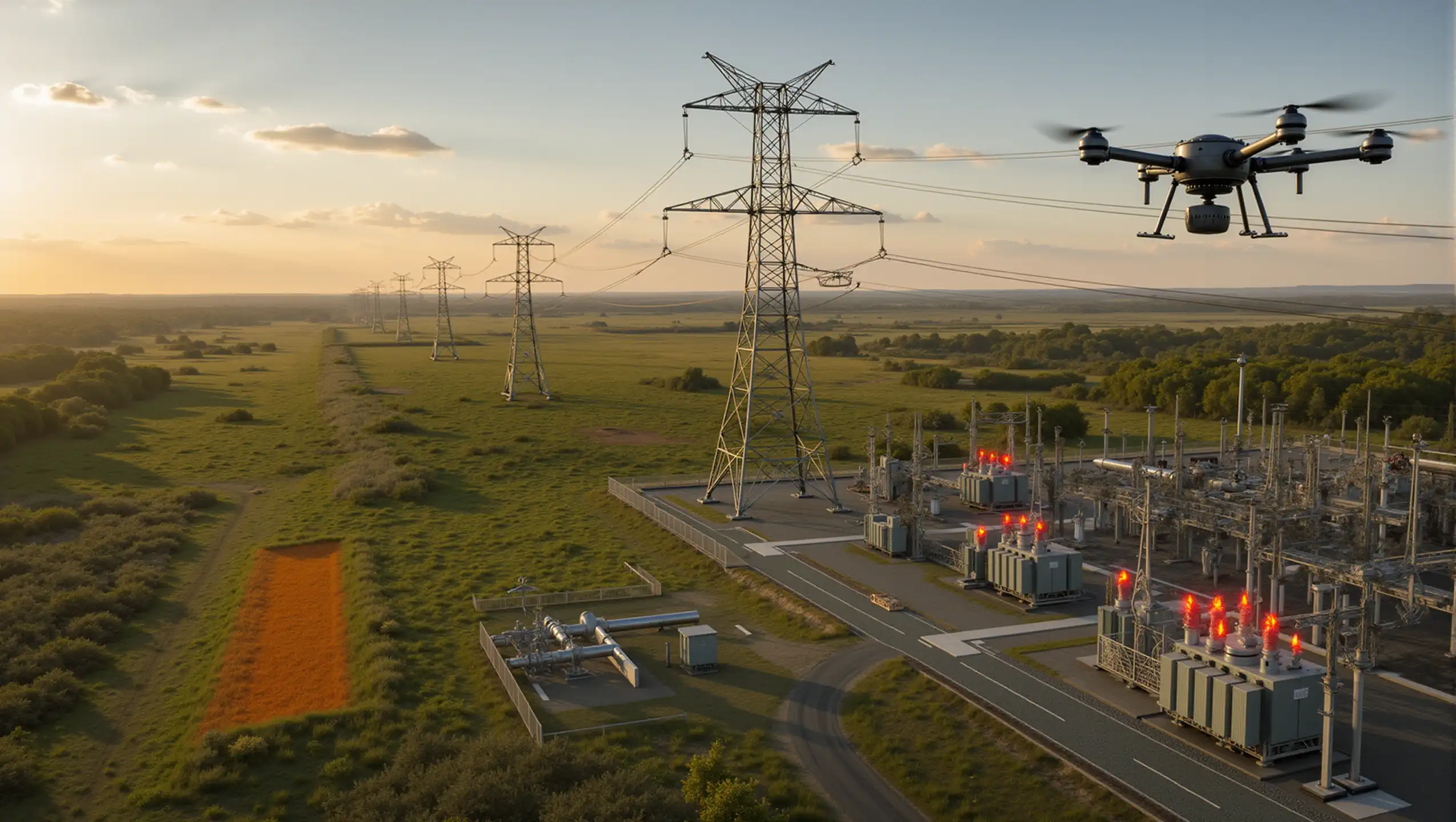
POWER LINE AND ELECTRICAL INSPECTIONS
Electrical infrastructure often requires inspection from a greater stand-off distance.
A configuration with radiometric thermal imaging and optical RGB zoom can help inspect connectors, transformers, insulators, conductors, and other components without bringing the aircraft unnecessarily close to energized equipment.
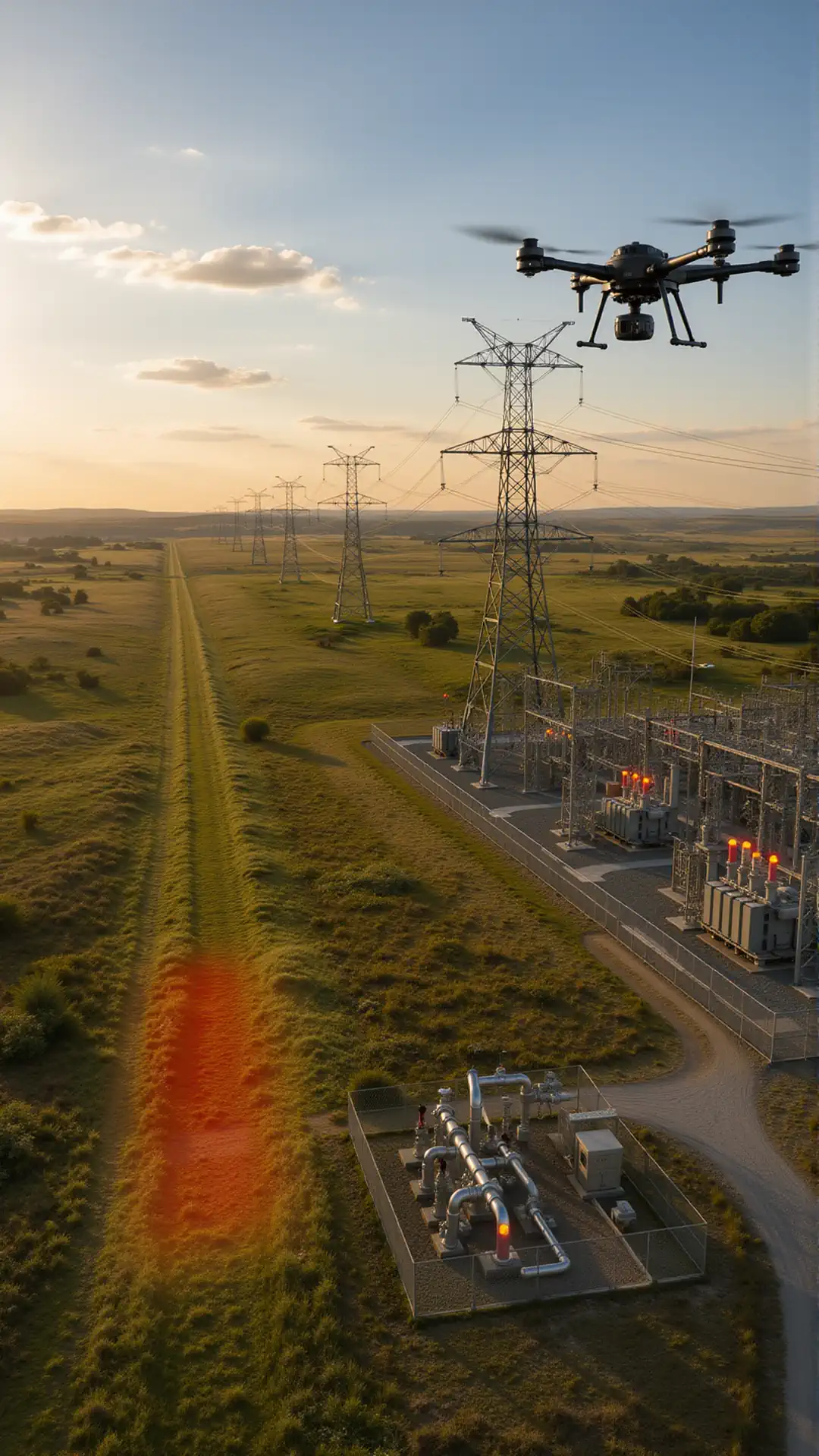
PIPELINE INSPECTIONS
Pipeline work may require different camera configurations depending on whether the target is exposed pipework, valves, pumping equipment, insulation, or surrounding terrain.
Thermal resolution, lens selection, radiometric measurement, and RGB zoom should be matched to the expected inspection distance and target size.
INDUSTRIAL EQUIPMENT INSPECTIONS
Industrial inspection can involve tanks, machinery, HVAC equipment, processing systems, and elevated components.
A stabilized EO/IR payload with thermal imaging and visible zoom may be more useful than a basic fixed thermal camera when the operator must examine multiple targets at different distances and angles.
Thermal Camera and RGB Data Workflow
DRONES WITH THERMAL CAMERAS CAN CAPTURE INFRARED AND VISIBLE DATA DURING THE SAME INSPECTION, HELPING OPERATORS LOCATE TEMPERATURE ANOMALIES AND IDENTIFY THE PHYSICAL COMPONENT OR SURFACE ASSOCIATED WITH THEM.
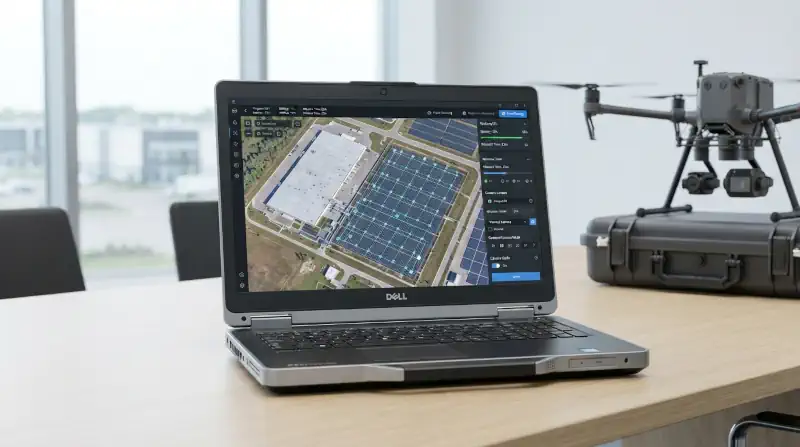
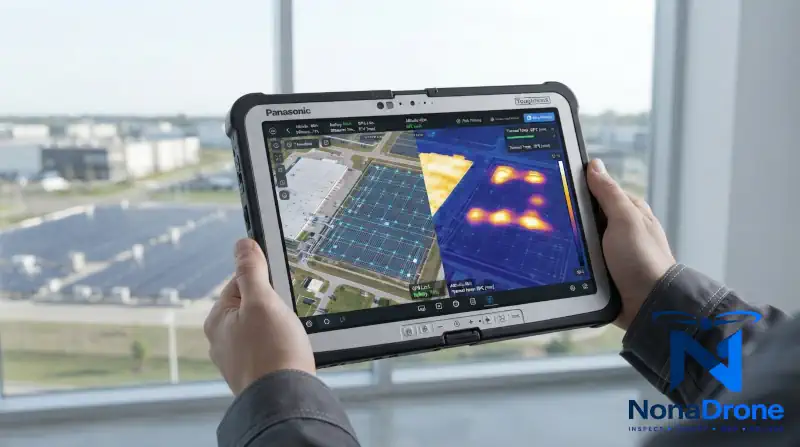
LIVE INFRARED VIEWING
View the thermal camera feed during flight to locate unusual hot or cold areas and determine where closer inspection is required.
Depending on the payload, the operator may be able to switch between infrared and visible views or monitor both during the same flight.
RGB VISUAL INSPECTION
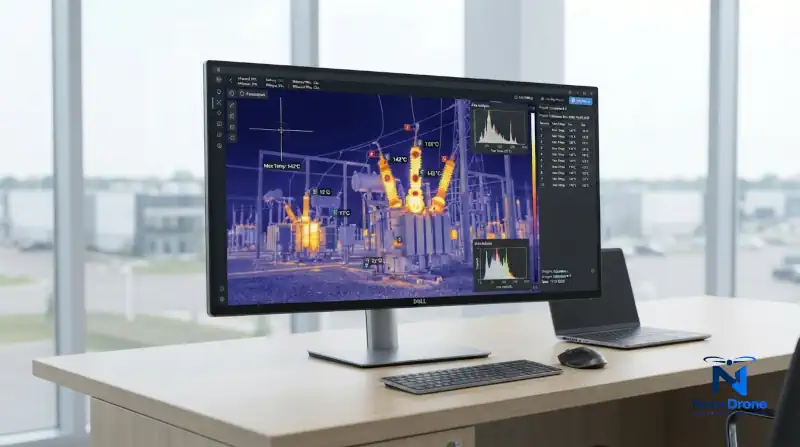
A visible RGB camera provides context that an infrared image may not show clearly.
RGB imagery can help identify the exact panel, connector, roof section, cable, mechanical component, or structural feature associated with a thermal anomaly.
TEMPERATURE DATA
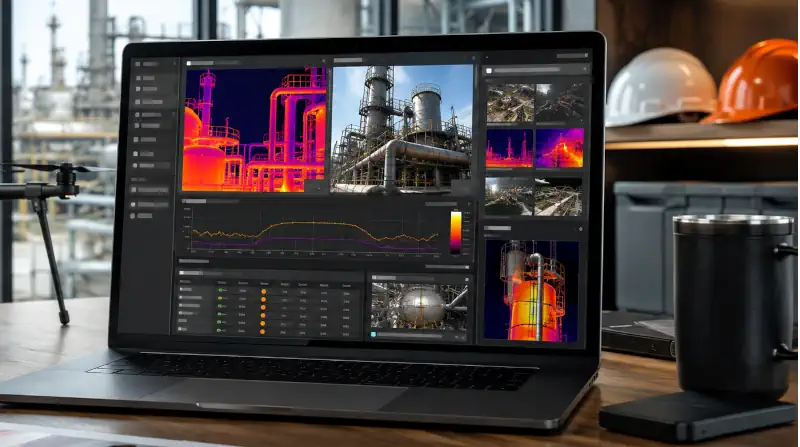
When the installed camera supports radiometric measurement, captured images can contain temperature information that can be analyzed after the flight.
This is important when the required result includes actual temperature values rather than only relative hot and cold areas.
INSPECTION DOCUMENTATION
Thermal and visible images can be reviewed together, annotated, organized by location, and included in technical or customer-facing inspection reports.
The available workflow depends on the installed payload, metadata, software, and aircraft configuration.
How to Compare Thermal Camera Specifications
How to Compare Thermal Camera Configurations
Thermal Camera Resolution
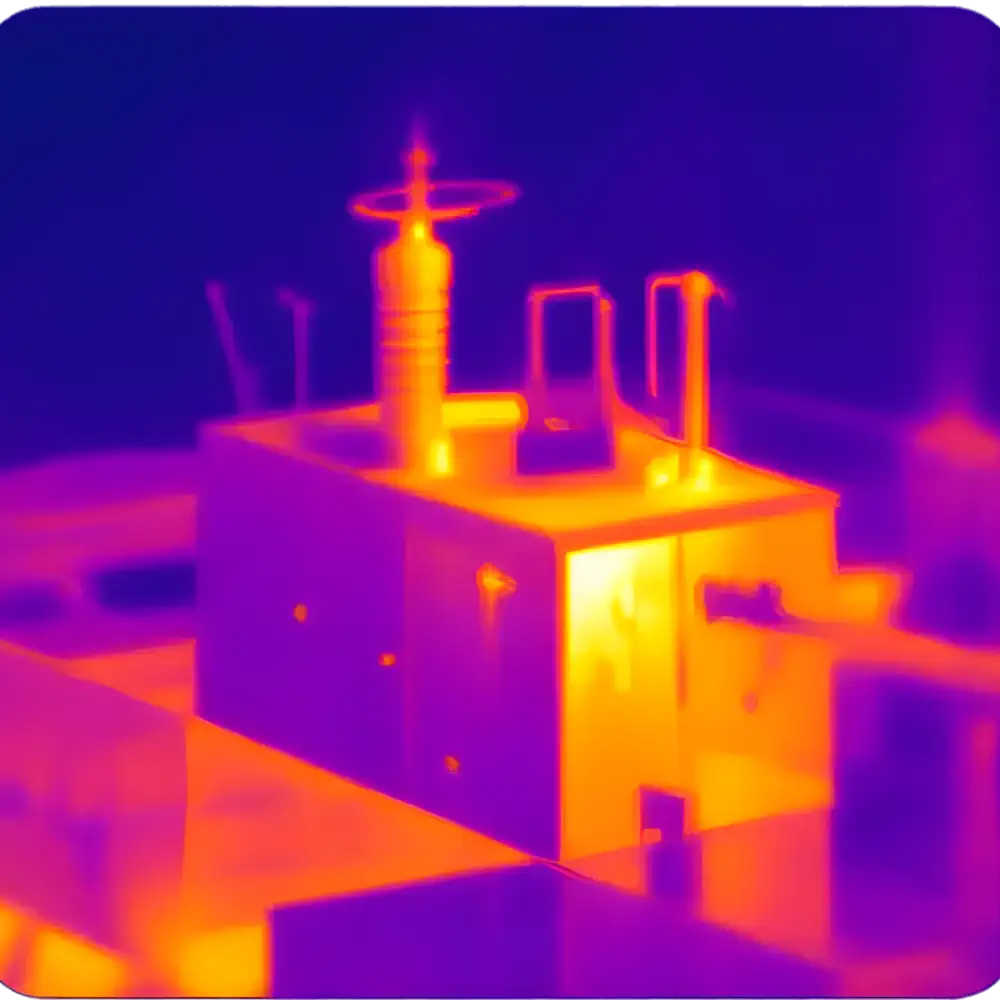
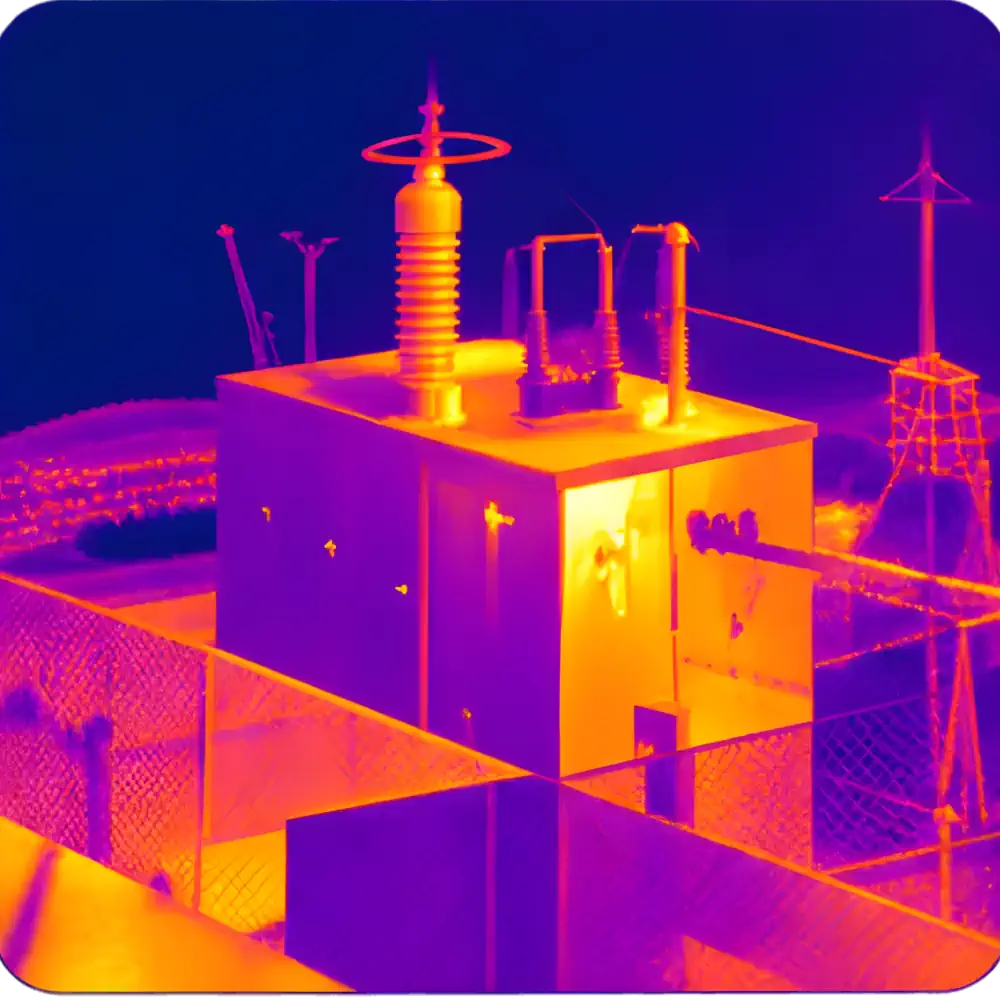
At the same field of view and inspection distance, higher thermal resolution places more detector pixels on the target.
01 — IMAGE DETAIL
Same Scene — Different Resolution
160 x 120
Less detail
Harder to identify
320 x 240
More detail
Easier to detect
640 x 480
Clear detail
Smaller features visible
Factors That Influence the Result
Target size
How small is the object?
Inspection distance
How far are you from the target?
Lens field of view
Wider or narrower view?
Viewing angle
Are you looking straight on?
Focus
Is the target in focus?
Atmospheric conditions
Haze, humidity, temperature
Thermal contrast
How different is the target temperature?
Surface properties
Emissivity and material type
The camera should be selected around the smallest target that needs to be identified.
How Thermal Resolution Affects Inspection Results
Thermal detector resolution determines how many infrared pixels are available to represent the scene.
At the same inspection distance and field of view, a higher-resolution sensor places more detector pixels on the same target. This can make smaller components, localized hot spots, edges, and temperature patterns easier to distinguish.
Resolution alone, however, does not determine useful inspection detail.
The final result also depends on target size, working distance, lens field of view, focus, viewing angle, thermal contrast, atmospheric conditions, and the thermal properties of the inspected surface.
This is why a high-resolution infra red drone can still produce limited detail when the aircraft is too far from a small target or when a very wide lens spreads the available detector pixels across a large scene.
The useful question is therefore not simply “What thermal resolution does the camera have?”
It is:
How many detector pixels will actually fall on the smallest feature that needs to be identified from the required inspection distance?
For close-range roof or building inspection, a wider field of view may provide efficient surface coverage. For smaller electrical components, tower hardware, industrial equipment, or other distant targets, higher thermal resolution combined with an appropriate lens can become much more important.
Radiometric Thermal Camera
A radiometric thermal camera measures temperature values for every pixel, turning images into reliable data.
02 — TEMPERATURE DATA
Thermal image
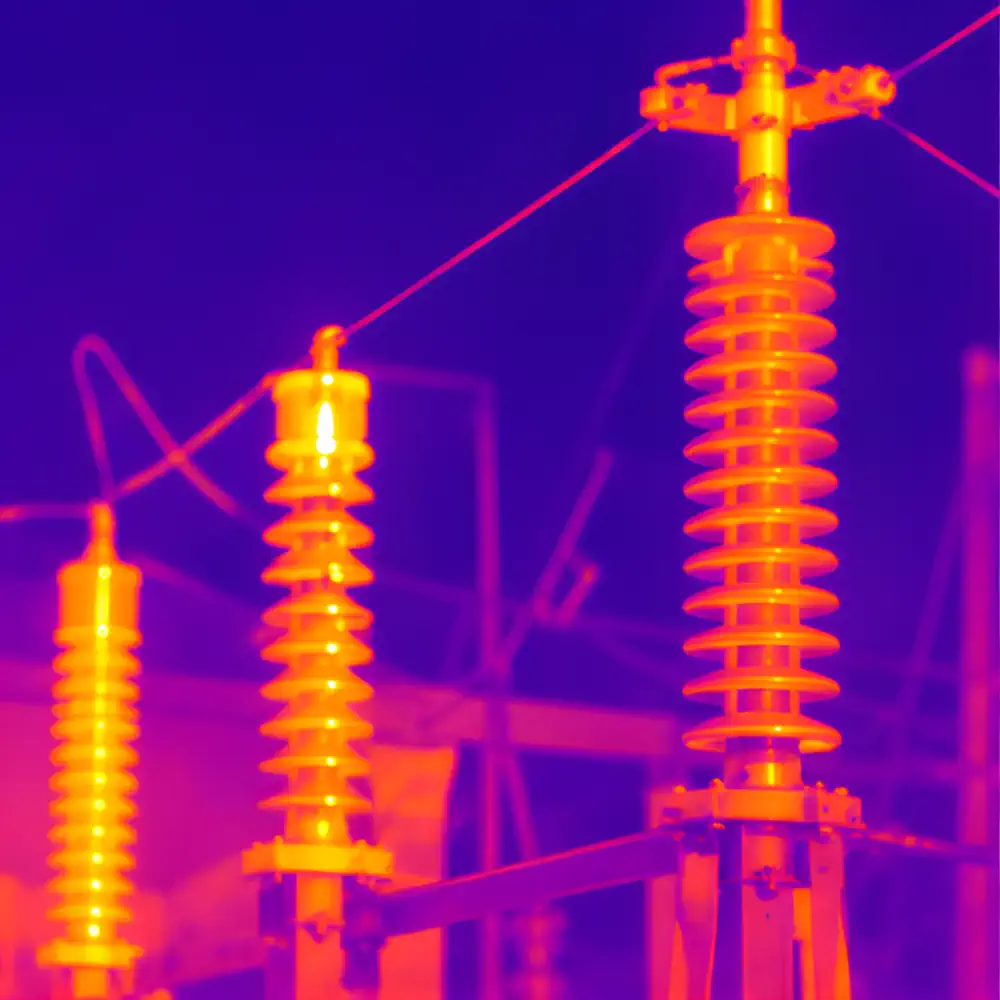
Captures temperature data for every pixel
Pixel measurement data
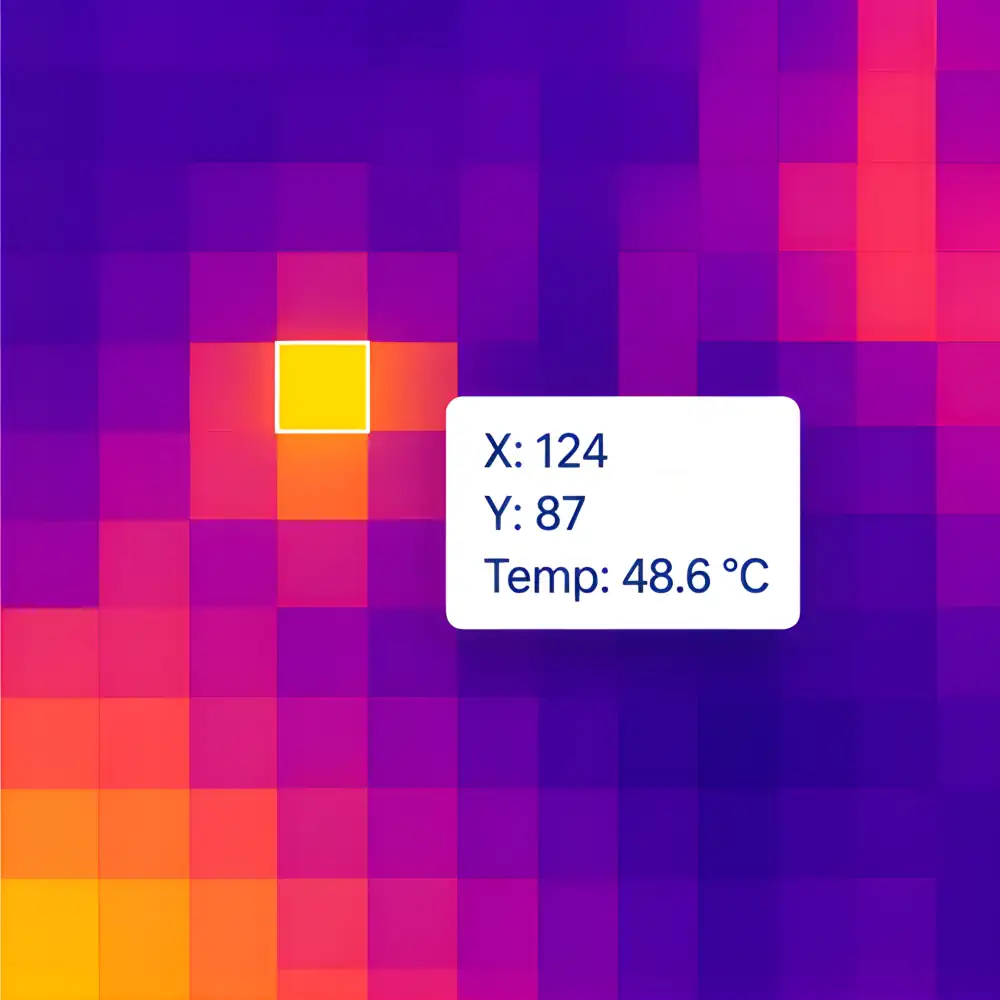
Each pixel contains a temperature value
Post-flight analysis
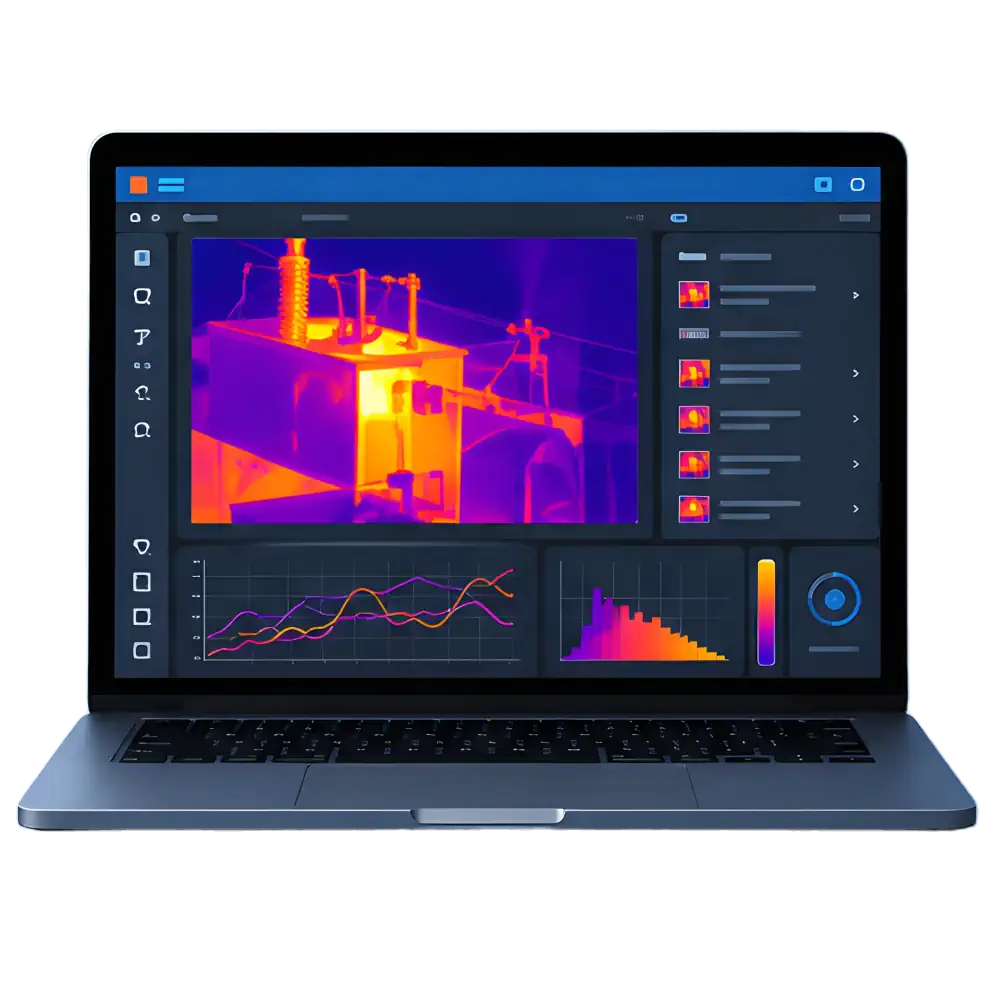
Analyse, measure and identify anomalies
Report
Create reports with images and measurements
Typical uses
Component temperature measurement
Temperature comparisons
Anomaly quantification
Technical reporting
Radiometric capability is a data feature, not a guarantee of perfect measurement accuracy.
Results can be affected by emissivity, reflections, viewing angle and ambient conditions.
How Radiometric Thermal Data Works
A radiometric thermal camera records temperature-related information for individual image pixels rather than providing only a visual representation of hot and cold areas.
This allows captured imagery to be reviewed after the flight and used for workflows such as component temperature measurement, temperature comparison, anomaly quantification, recurring inspection, and technical reporting.
A thermographic camera drone intended for quantitative inspection should therefore use a radiometric sensor when the required result includes actual temperature values.
Radiometry should not be confused with thermal resolution.
Resolution determines how much spatial detail the detector can represent. Radiometric capability determines whether temperature information is stored with the image for later measurement and analysis.
A thermal image that displays a temperature scale on a live screen does not automatically mean the saved image contains calibrated radiometric data.
Measurement quality also depends on inspection conditions.
Surface emissivity, reflected temperature, viewing angle, target distance, atmospheric conditions, environmental temperature, and camera configuration can influence the reported value.
Radiometric capability should therefore be treated as a required data feature when temperature measurement is part of the job, not as a guarantee that every captured value will be perfectly accurate under every operating condition.
Thermal Camera Lens and Inspection Distance
To identify small targets from farther away, the camera must place enough detector pixels on the target. Thermal resolution, field of view, and inspection distance work together
03 — DETAIL AT DISTANCE
Wider Field of View
More coverage, less target detail
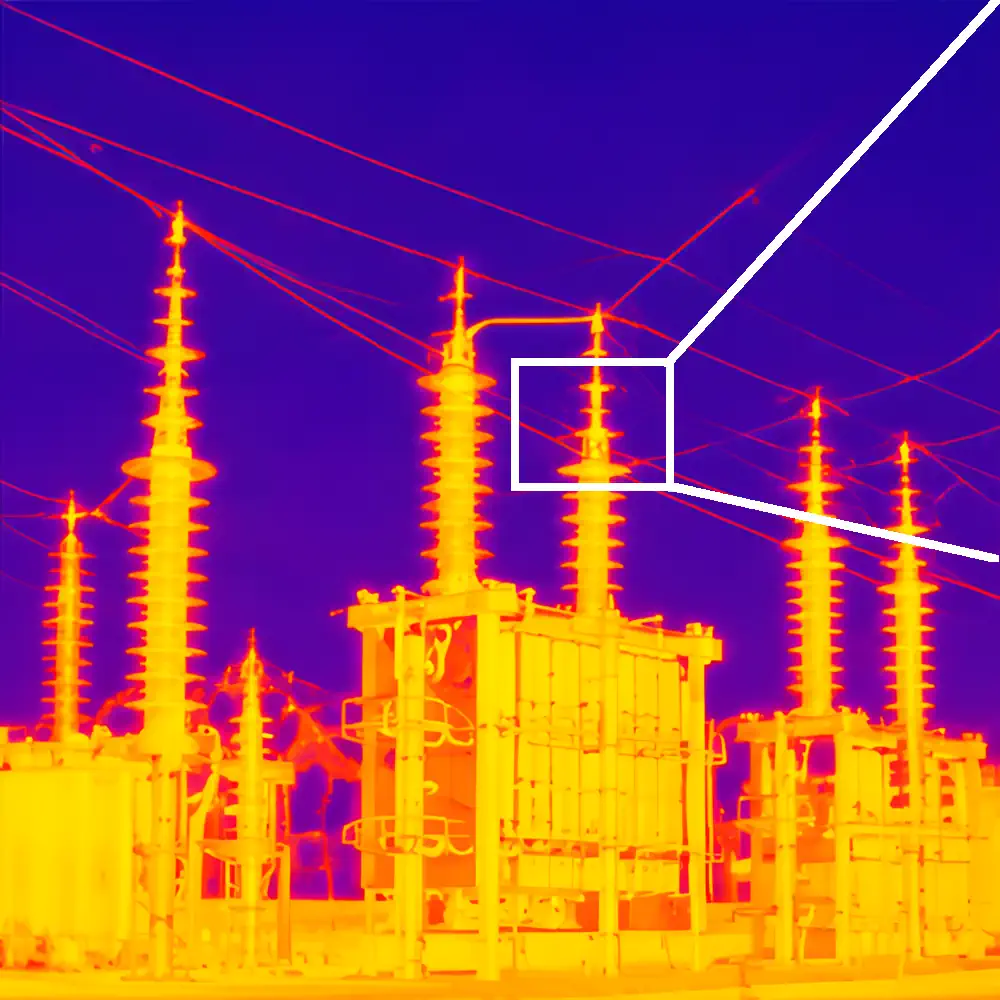
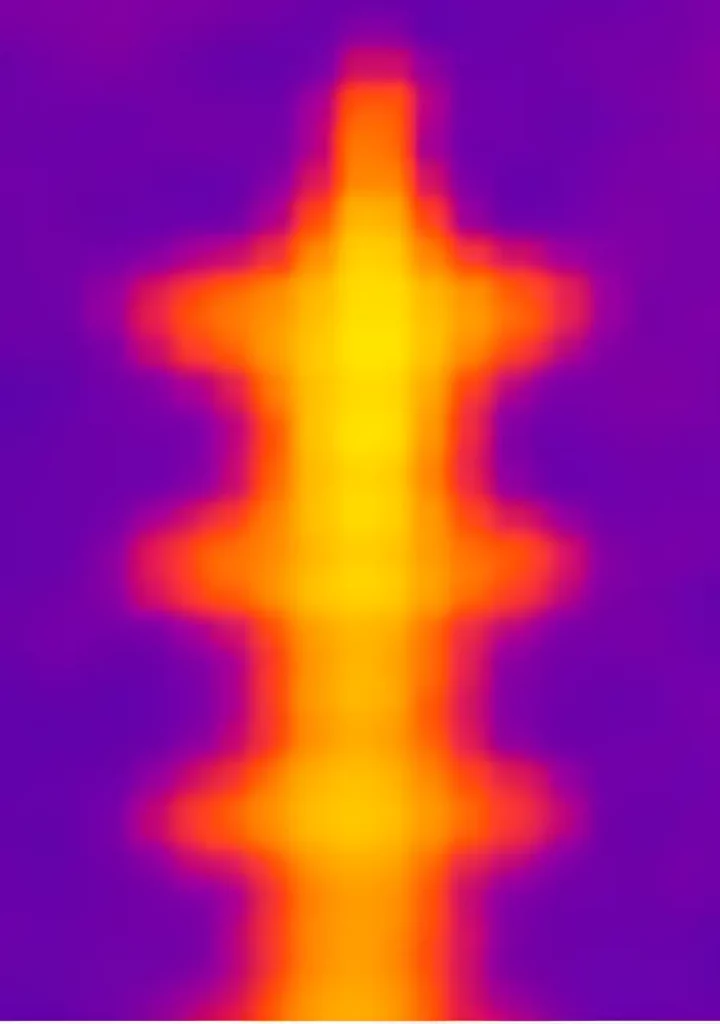
Shows a larger area
Target occupies fewer pixels
Better for overview and closer inspection
Longer focal length · Narrower FOV
Narrower Field of View
Less coverage, more target detail
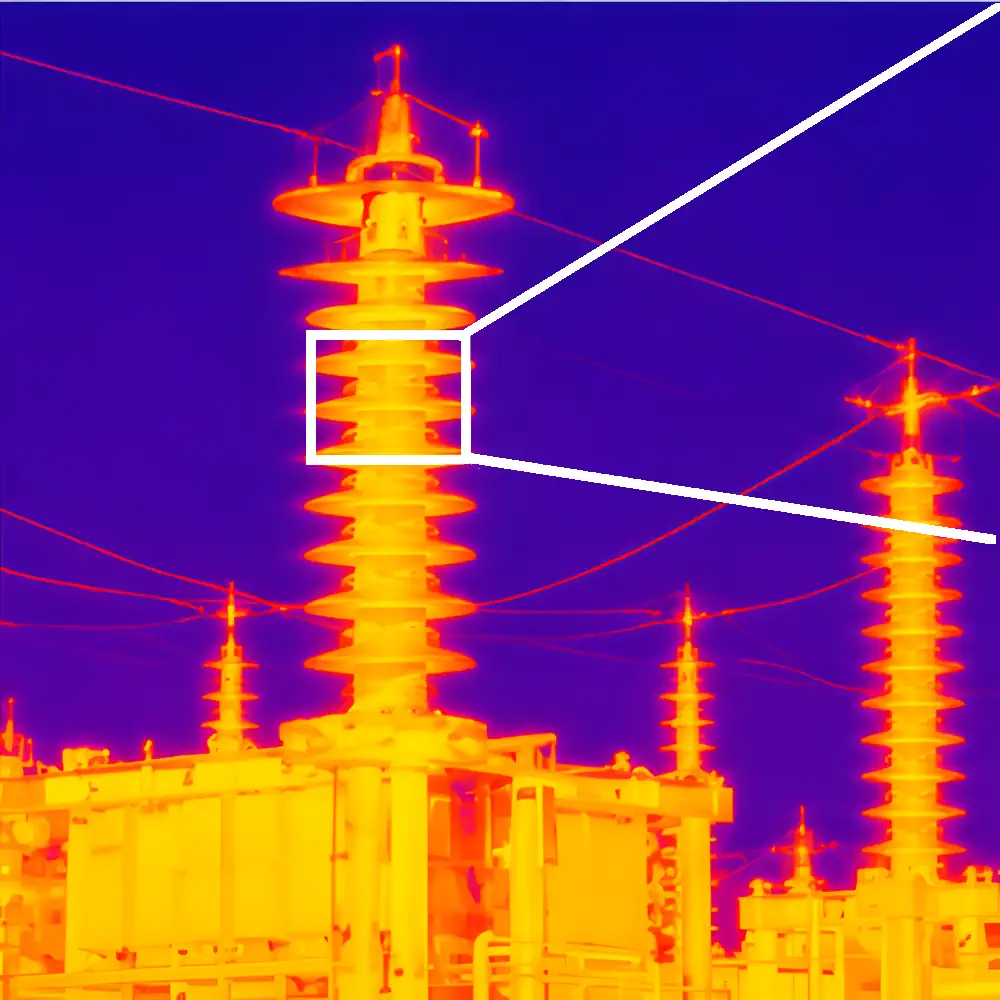
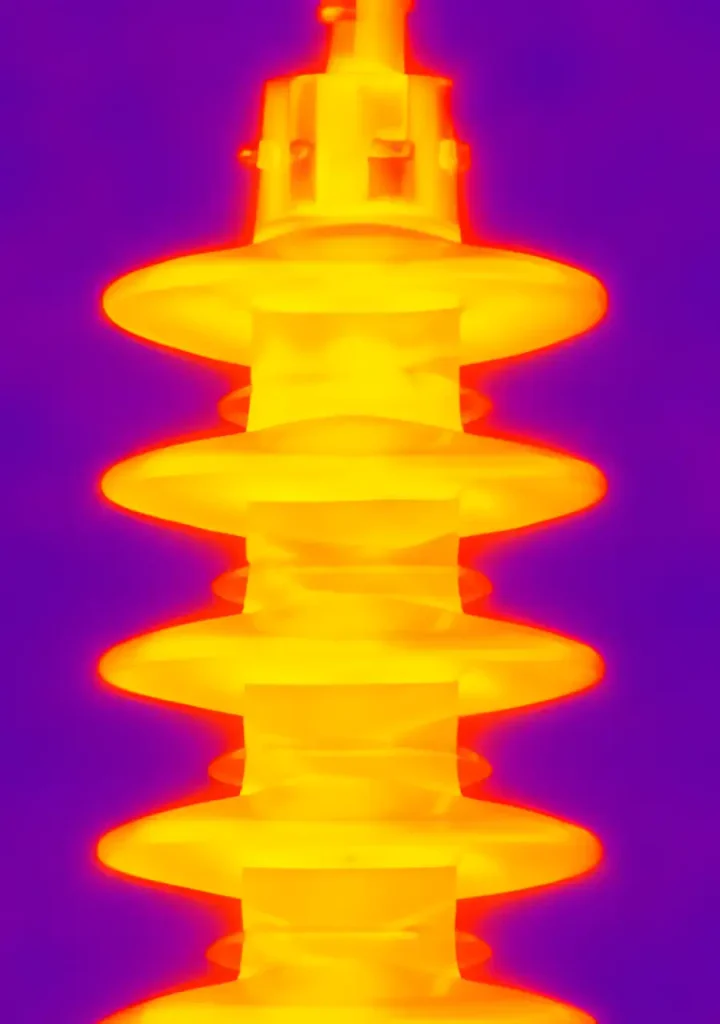
Shows a smaller area
Target occupies more pixels
Better for small targets at longer distances
Shorter focal length · Wider FOV
Higher thermal resolution
More detector pixels
Narrower field of view
Magnifies the target in the image
Inspection distance
How far the camera is from the target
More pixels on target
Target occupies more detector pixels
Smaller details can be resolved
Improved ability to detect and assess
For small targets at longer distances, look for higher thermal resolution combined with a narrower field of view.
A narrower FOV provides more target detail, but covers less of the scene.
How FOV, Lens and Distance Affect Inspection Detail
Thermal resolution, lens field of view, and inspection distance work together to determine how many detector pixels fall on the target.
A wider field of view captures more of the scene but spreads the available detector pixels across a larger area.
This can be useful for roof surfaces, building envelopes, large equipment, and general thermal surveys where coverage is more important than resolving a very small component.
A narrower field of view covers less of the scene but places more detector pixels on a distant target.
This can provide greater useful detail when inspecting small electrical components, tower hardware, utility equipment, industrial systems, or other targets that cannot be approached closely.
Inspection distance has the same practical effect.
As distance increases, the target occupies fewer pixels unless detector resolution or lens selection compensates for that change.
This is why advertised detection range should not be treated as useful inspection range.
An infrared drone may detect that a large heat source exists from a substantial distance while still being unable to identify a small component, measure a localized feature, or produce enough detail for a technical report from that same position.
For small targets at longer working distances, look at thermal resolution and lens field of view together rather than comparing either specification independently.
RGB Camera and Optical Zoom
Use thermal to find the anomaly, then RGB and optical zoom to see what it is.
04 — VISUAL IDENTIFICATION
Thermal
Where is the anomaly?

Quickly identifies hot or cold spots
Works day and night
Shows what needs a closer look
Verified Finding
Thermal detection confirmed with visual detail
RGB
What is it?
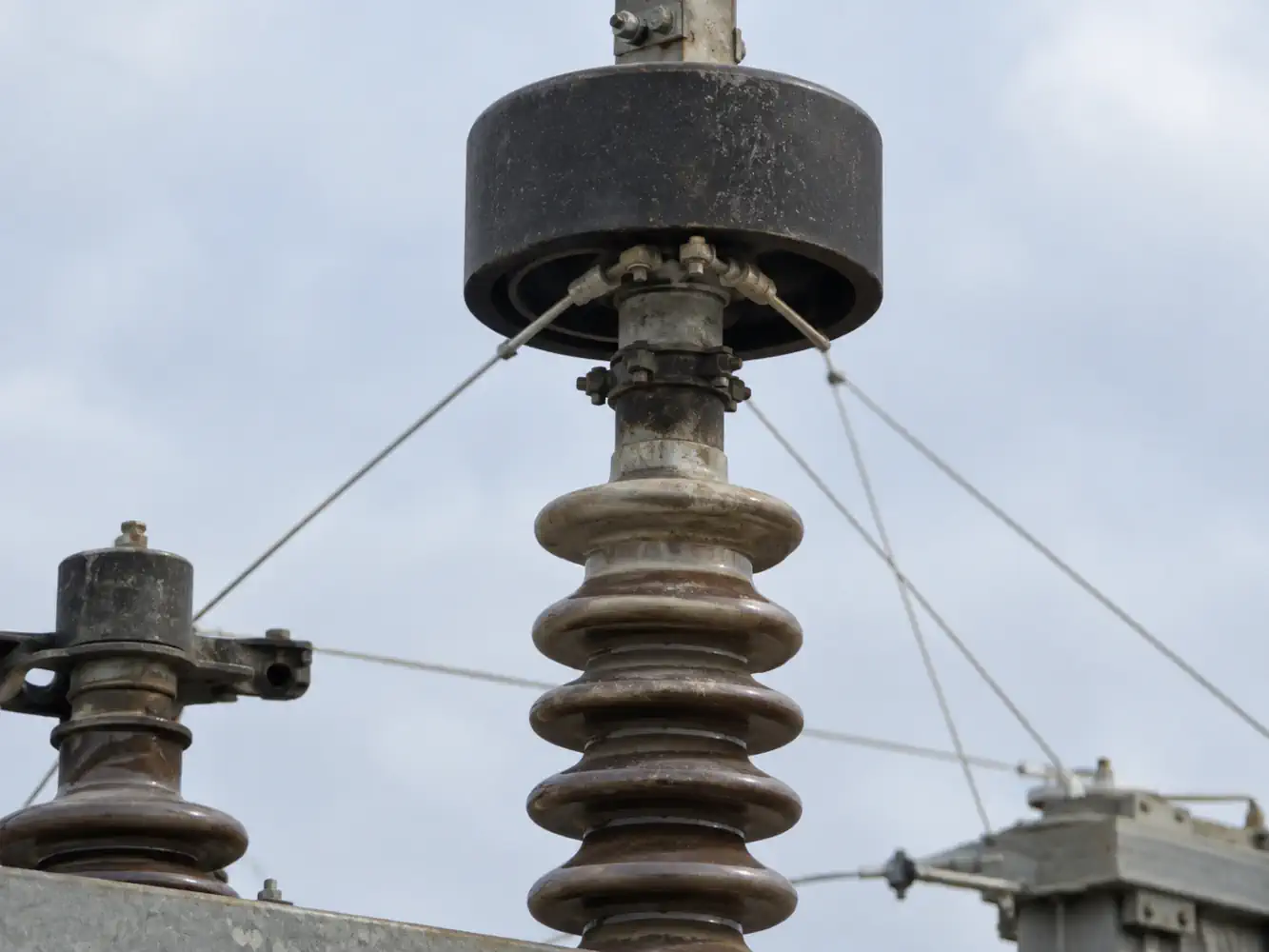
Provides visual context
Shows actual component
Helps confirm the cause
Standard RGB
Close-range documentation with a wide field of view.
Great for site overview images and general context.
Optical Zoom
See more detail from a longer distance.
Helps you identify components without getting closer.
Choosing RGB Resolution and Optical Zoom
Thermal imaging tells the operator where an unusual temperature pattern is located. RGB imaging helps determine what physical object or surface is associated with it.
A standard RGB camera can be sufficient when the aircraft can operate close to the target and the purpose is general documentation.
Higher RGB resolution or optical zoom becomes more useful when the drone must remain farther away.
This is common when inspecting electrical equipment, transmission structures, towers, industrial machinery, elevated assets, facades, or other locations where reducing stand-off distance may be unsafe or impractical.
Optical zoom increases visible detail without requiring the aircraft to move closer to the target.
For example, the thermal camera may locate an abnormal hot area while the RGB camera identifies the exact connector, insulator, fastener, panel, cable, valve, or surface condition associated with it.
For this reason, the thermal and RGB cameras should be selected as one inspection system.
The best configuration is not necessarily the payload with the highest thermal specification or the highest RGB megapixel count. It is the combination that provides enough thermal and visible detail at the actual working distance required for the job.
Thermal Sensitivity and NETD
Thermal sensitivity determines how small a temperature difference the sensor can distinguish. NETD is commonly used to describe this capability.
05 — THERMAL SENSITIVITY
Higher NETD
Lower thermal sensitivity
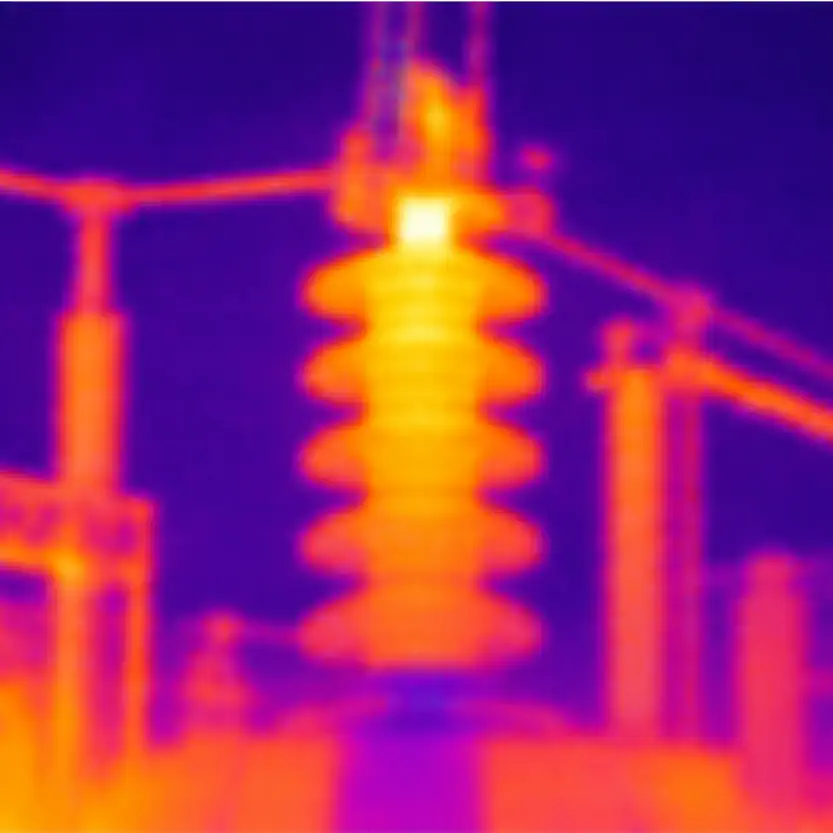
Subtle temperature differences are harder to distinguish
Fine thermal separation is reduced
Small anomalies may be less obvious
Lower NETD
Higher thermal sensitivity
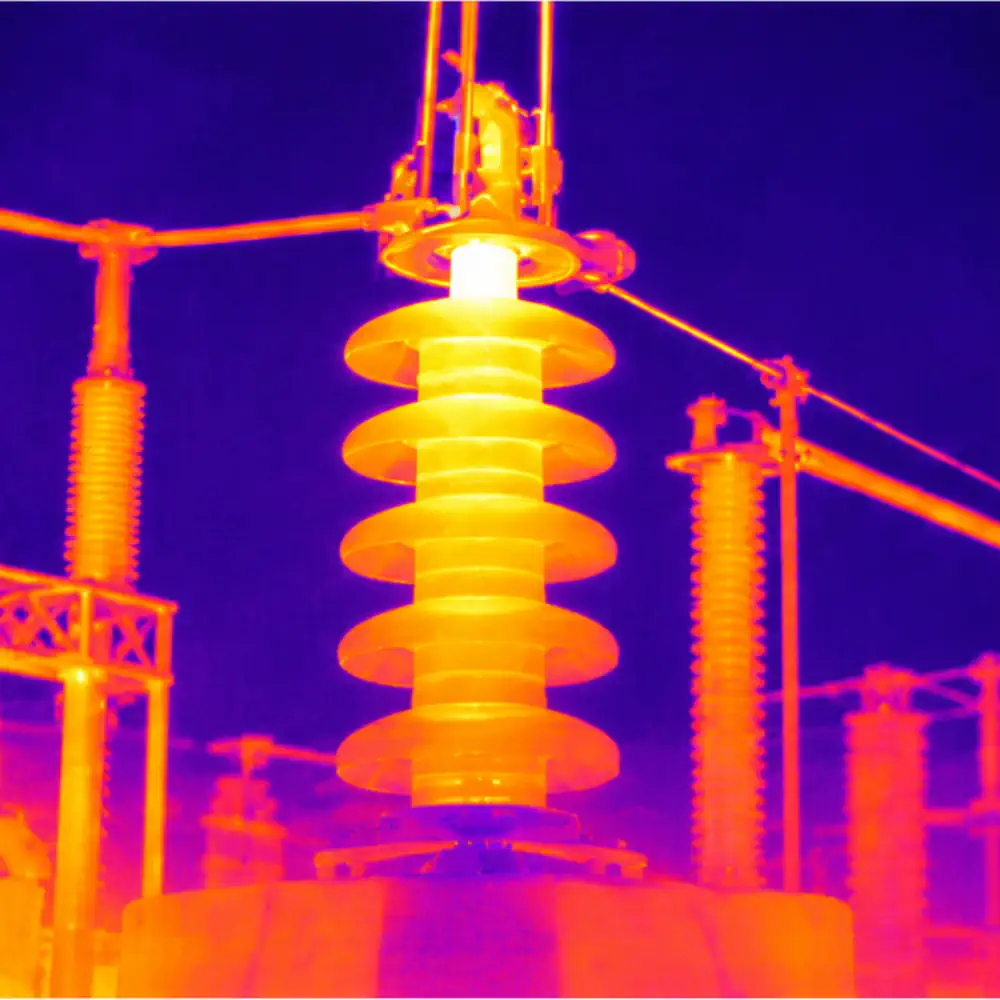
Subtle temperature differences are easier to distinguish
Better separation between similar temperatures
Small anomalies are easier to see
Thermal resolution
How small a feature can be spatially resolved
Thermal sensitivity (NETD)
How small a temperature difference can be distinguished
More useful thermal detail
Lower NETD = better thermal sensitivity.
Resolution affects spatial detail. NETD affects how clearly small temperature differences can be separated.
What NETD Means for Thermal Inspection
Thermal sensitivity describes how small a temperature difference the detector can distinguish.
NETD — Noise Equivalent Temperature Difference — is commonly used to represent this characteristic.
A lower NETD generally indicates better thermal sensitivity, meaning the sensor can distinguish smaller differences between similar temperatures.
This matters when the target does not produce a strong thermal contrast.
Small insulation variations, subtle heat transfer, weak electrical anomalies, uneven surface temperatures, or early-stage thermal patterns may be more difficult to distinguish when sensor noise is high relative to the temperature difference being observed.
Thermal sensitivity and thermal resolution describe different things.
Thermal resolution affects how small a physical feature can be represented spatially.
Thermal sensitivity affects how small a temperature difference can be separated from nearby temperatures.
A camera can therefore have high detector resolution but still be less effective at separating subtle temperature differences than another sensor with better NETD performance.
For professional inspection, both specifications should be considered together with the lens, target size, distance, environmental conditions, and required result.
Aerial Thermal Cameras and Payload Integration
Aerial thermal cameras intended for unmanned aircraft must be compatible with the aircraft mechanically, electrically, and through the control system.
Integration considerations include:
- payload weight;
- mounting interface;
- power requirements;
- communication protocol;
- camera control;
- gimbal compatibility;
- image storage;
- metadata;
- triggering;
- aircraft balance;
- expected effect on flight time.
This becomes particularly important on modular platforms where the aircraft and camera are sourced separately.
A mounting bracket alone does not guarantee complete operational compatibility.
The aircraft must be able to carry and power the payload, the operator must be able to control the camera as required, and the resulting thermal and RGB data must be stored in a format that supports the intended analysis and reporting workflow.
For configurable professional systems, payload integration should be confirmed for the exact aircraft, gimbal, camera, controller, software, and data workflow being proposed.
Drone with Thermal Camera for Sale
When comparing a drone with thermal camera for sale, evaluate the complete operating configuration rather than only the aircraft or camera price.
The same rule applies when searching for a drone with infrared camera for sale, infrared drones for sale, or drones with infrared cameras for sale.
Two systems with similar headline specifications can provide very different inspection capability once the complete configuration is considered.
Compare:
- thermal detector resolution;
- radiometric capability;
- thermal lens and field of view;
- RGB camera;
- optical zoom;
- gimbal stabilization;
- flight time with the installed payload;
- operating range;
- battery configuration;
- environmental capability;
- payload compatibility;
- camera controls;
- image and metadata formats;
- analysis software;
- controller or ground station;
- replacement parts;
- setup;
- training;
- technical support.
Pricing should also be compared on an equivalent basis.
One advertised price may cover only the aircraft while another includes the thermal payload, RGB camera, gimbal, controller, batteries, charger, mounting hardware, software, setup, and training.
A lower advertised price is therefore not automatically a lower system price.
Cheapest Drone with Thermal Camera: When Lower Cost Can Work
The cheapest drone with thermal camera can be suitable when mission requirements are limited.
A lower-cost system may be enough when:
- the target is relatively large;
- the aircraft can operate close to it;
- only basic anomaly detection is required;
- high-resolution RGB documentation is unnecessary;
- radiometric measurement is not required;
- inspection volume is limited.
More demanding work may require radiometry, higher thermal resolution, a different lens, better RGB imaging, optical zoom, longer endurance, or stronger payload integration.
The useful comparison is therefore the cost of collecting the required data, not simply the lowest hardware price.
Frequently Asked Questions About Drones with Thermal Cameras
What is a drone with thermal camera?
A drone with thermal camera is an unmanned aircraft equipped with an infrared sensor that detects thermal radiation from surfaces, equipment, buildings, and infrastructure. Professional systems may use a dedicated thermal payload or a combined EO/IR camera with both thermal and visible RGB imaging.
What is the difference between a drone with infrared camera and a standard camera drone?
A standard RGB camera records visible light and shows color, markings, physical appearance, and surface detail. A drone with infrared camera detects thermal radiation and shows temperature patterns. Professional inspection systems often combine both so a thermal anomaly can be matched with the corresponding visible component or surface.
Is a drone with IR camera the same as a thermal camera drone?
In commercial UAV applications, drone with IR camera, drone with infrared camera, infrared drone, and thermal camera drone are commonly used for systems carrying thermal infrared sensors. The important specifications are the actual sensor type, thermal resolution, lens, radiometric capability, and whether visible RGB imaging is included.
Is a drone with heat camera the same thing?
Drone with heat camera is an informal term commonly used for a drone equipped with a thermal or infrared camera. A thermal sensor does not photograph heat directly. It detects infrared radiation and converts that information into a thermal image.
Should a drone with thermal camera also have an RGB camera?
For many inspection workflows, yes. The thermal camera identifies temperature differences while the RGB camera provides visual context and helps identify the exact component, panel, connector, pipe, roof section, or structural feature associated with the thermal finding.
Can a drone with thermal camera measure actual temperatures?
Yes, when the installed camera supports radiometric measurement. A radiometric camera stores temperature-related information for individual image pixels so measurements can be reviewed after capture. Accuracy can still be affected by emissivity, reflections, distance, viewing angle, environmental conditions, and camera settings.
What thermal camera resolution should I choose?
The required thermal resolution depends on target size, inspection distance, lens field of view, and the smallest detail that must be identified. Higher resolution generally places more detector pixels on a target, but useful detail also depends on focus, viewing angle, thermal contrast, and operating conditions.
What should I look for in a UAV thermal camera?
Evaluate thermal resolution, radiometric capability, thermal sensitivity, lens field of view, focus, measurement range, image format, RGB integration, optical zoom, stabilization, metadata support, software compatibility, payload weight, and power requirements.
Is an integrated EO/IR camera better than a removable thermal payload?
Not necessarily. An integrated EO/IR camera can simplify installation and combine thermal and RGB sensors in one stabilized payload. A removable thermal camera can provide more flexibility for changing sensors, lenses, visible cameras, or future payload configurations.
Do infrared drones need optical zoom?
Not every application requires optical zoom. It becomes particularly useful when the aircraft must remain farther from towers, electrical equipment, industrial assets, elevated structures, or other targets. Thermal imaging locates the anomaly while optical RGB zoom provides additional visible detail.
How far can a drone with infrared camera inspect?
Useful inspection distance depends on detector resolution, lens field of view, target size, thermal contrast, atmospheric conditions, and the level of detail required. Detecting a large heat source can be possible from much farther away than accurately identifying or measuring a small component.
Can thermal and RGB images be captured together?
Yes, depending on the payload. Systems may provide synchronized capture, separate image files, side-by-side viewing, picture-in-picture display, blended imagery, or software-assisted comparison. The exact workflow should be confirmed for the selected camera.
What should I compare when looking for a drone with thermal camera for sale?
Compare the complete configuration, including the thermal sensor, radiometric capability, lens, RGB camera, optical zoom, stabilization, flight time with the installed payload, batteries, controller, software, data formats, mounting hardware, setup, training, and technical support.
Is the cheapest drone with thermal camera suitable for professional work?
Sometimes. A lower-cost system may be sufficient for basic anomaly detection at short working distances. More demanding inspections can require radiometric measurement, higher thermal resolution, optical zoom, longer endurance, or better payload and software integration.
Is a drone with night vision and thermal camera the same thing?
No. Thermal imaging detects infrared radiation emitted by surfaces and objects. Conventional night vision or low-light cameras use different imaging technology. A drone with night vision and thermal camera therefore requires a payload that actually includes both capabilities if both are needed.
Are infrared drones for sale always complete ready-to-fly systems?
No. Listings for infrared drones for sale may refer to aircraft-only, payload-only, or complete configured systems. Confirm whether the thermal camera, RGB camera, gimbal, controller, batteries, charger, mounting hardware, software, setup, and support are included.
Can aerial thermal cameras be installed on different drones?
Some aerial thermal cameras can be used with multiple aircraft platforms, but compatibility must be confirmed for weight, mounting, power, control protocol, gimbal integration, data connection, triggering, aircraft balance, and expected flight-time reduction.
How do I choose the right drone with thermal camera?
Start with the required result. Define the target, smallest relevant detail, practical inspection distance, whether actual temperature measurements are required, RGB and zoom requirements, expected operating conditions, and the required data workflow. Then select the camera and aircraft as one complete configuration.