
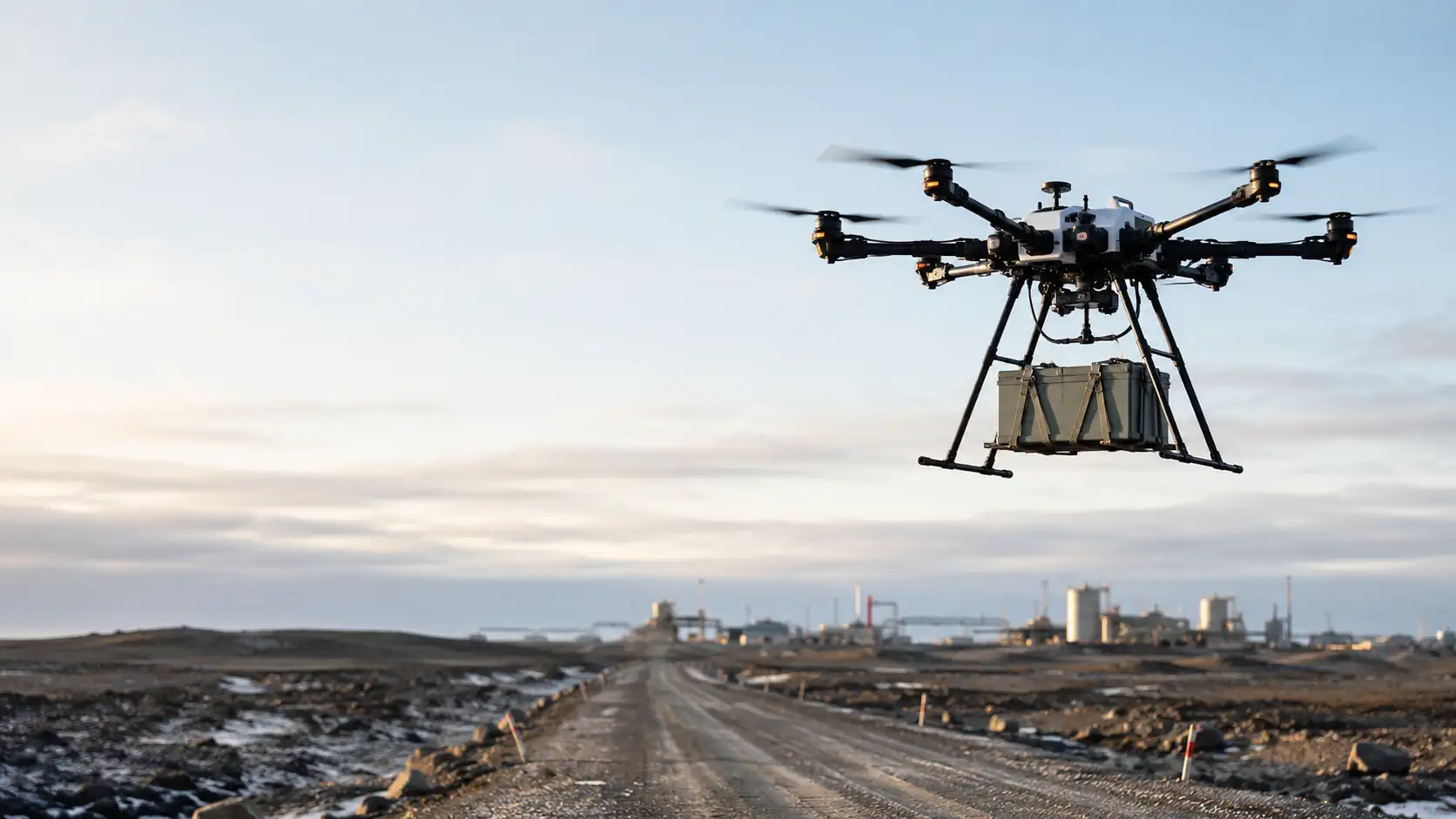
Heavy-Lift Drones
Choose a ready-to-deploy heavy-lift drone system for your payload and mission.
Ready-to-Deploy
Verified Specifications
U.S. Support
NDAA & Commercial Options
Select the Right Drone System
Describe what you need the drone system to do, or use our guided selector.
Loading selector...
HEAVY PAYLOAD CAPACITY
SECURED CARGO TRANSPORT
Route
Shield Check
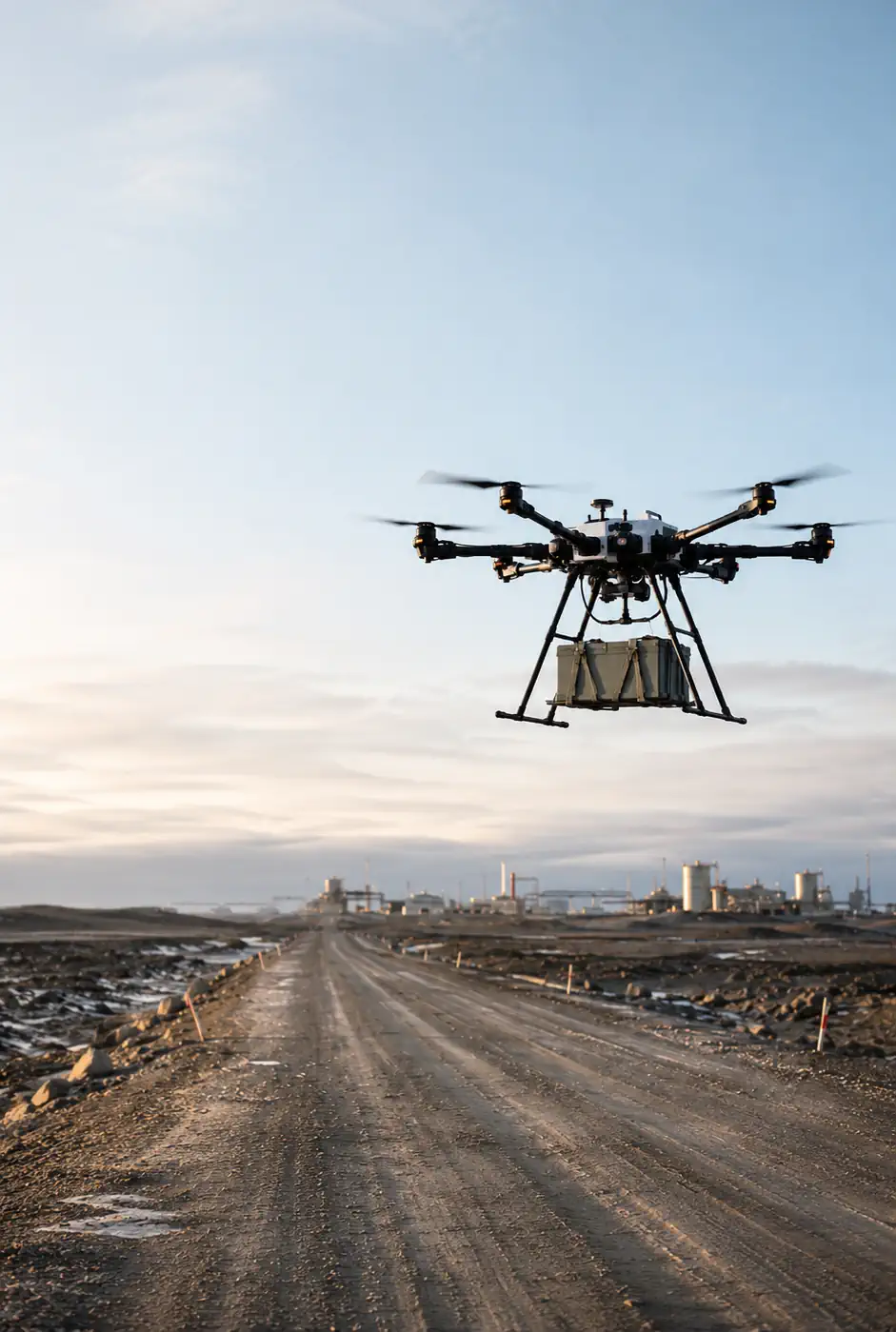
Heavy-Lift Drones
Choose a ready-to-deploy heavy-lift drone system for your payload and mission.
Ready-to-Deploy
Verified Specifications
U.S. Support
NDAA & Commercial Options
Select the Right Drone System
Describe what you need the drone system to do, or use our guided selector.
Loading selector...
HEAVY PAYLOAD CAPACITY
SECURED CARGO TRANSPORT
Route
Shield Check
On this page:
Drone systems
Types of work
Software
FAQ
Overview
Heavy-Lift Drone Systems
SOFTWARE FOR HEAVY-LIFT DRONE OPERATIONS
HEAVY-LIFT MISSIONS DEPEND ON MORE THAN THE AIRCRAFT. PLANNING, PAYLOAD CONTROL, MISSION RECORDS, AND FLEET OVERSIGHT HELP TEAMS TURN A CONFIGURED PLATFORM INTO A REPEATABLE COMMERCIAL WORKFLOW.
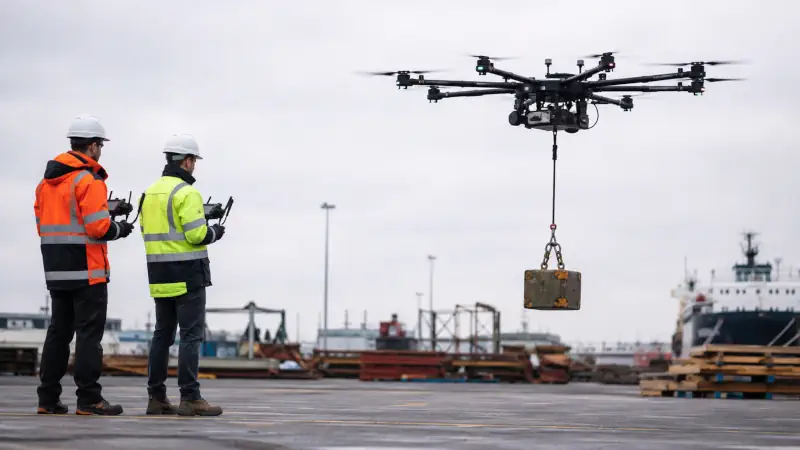
MISSION PLANNING AND ROUTE CONTROL
Mission-planning software helps the crew define the operating area, route, waypoints, exclusion zones, and contingency actions before launch. For heavy-lift work, the plan should reflect the attached payload, available takeoff and landing space, site obstacles, crew positions, and the need for manual intervention. Buyers should confirm which planning functions are supported by the proposed aircraft and control system.
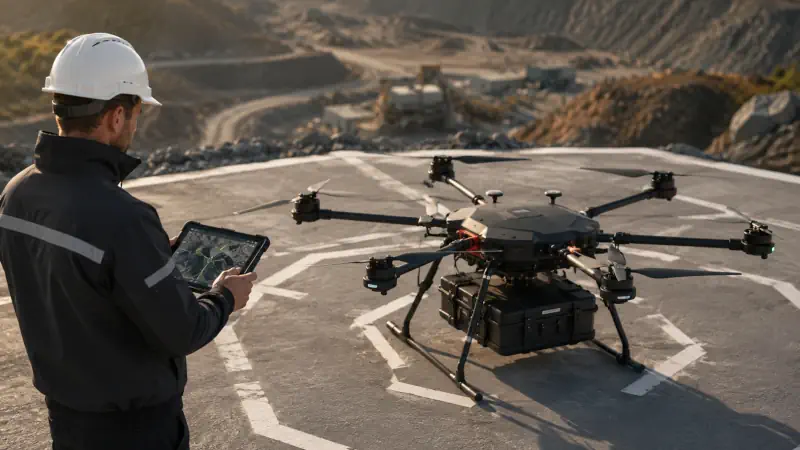
PAYLOAD CONTROL AND TELEMETRY
Payload-control software connects the operator with mission equipment, supporting commands, status monitoring, and event logging when the integration allows it. Available data depends on the payload, aircraft interfaces, and communication architecture. Buyers should confirm which functions remain available in flight, whether a dedicated payload operator is required, and how the system reports faults or loss of communication.
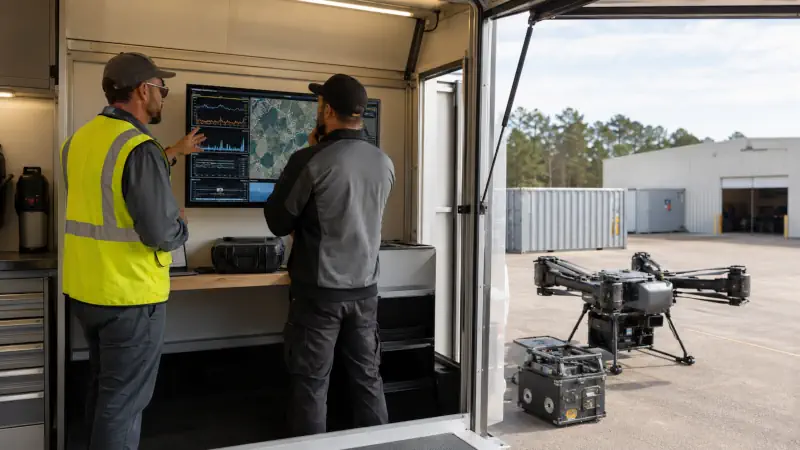
FLIGHT RECORDS AND MISSION REVIEW
Flight-record and review tools help operators retain mission history, examine aircraft events, document crew actions, and connect flight activity with job records. A practical review process can support maintenance decisions, internal quality control, and post-mission reporting. Teams should verify what data is captured, how it can be exported, who can access it, and how long records must be retained.
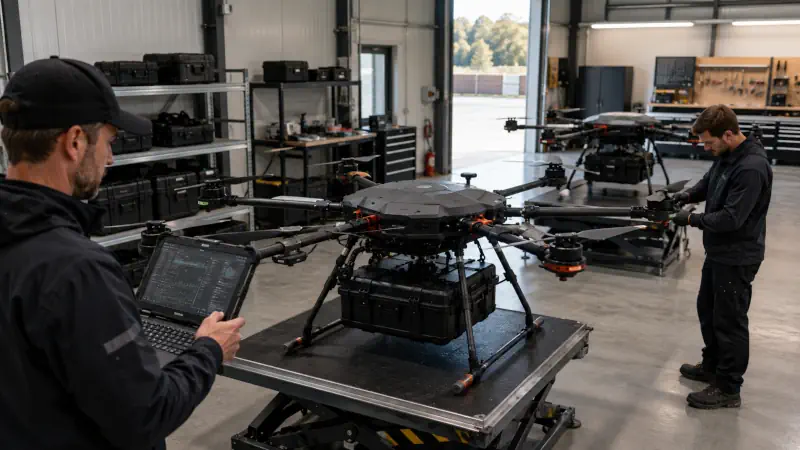
FLEET AND MAINTENANCE OVERSIGHT
Fleet software can organize aircraft status, configuration history, component records, inspections, and scheduled service across multiple crews or sites. This is especially useful when airframes support different payloads or operating profiles. Software does not replace the manufacturer’s maintenance process; it helps the organization assign responsibility, identify upcoming actions, and keep the approved aircraft-payload configuration visible to the operations team.
Types of Work for Heavy-Lift Drones
Heavy-lift UAVs support different commercial tasks, but every application creates its own requirements for payload handling, route planning, crew coordination, site control, and system integration. The mission should determine the platform—not the other way around.
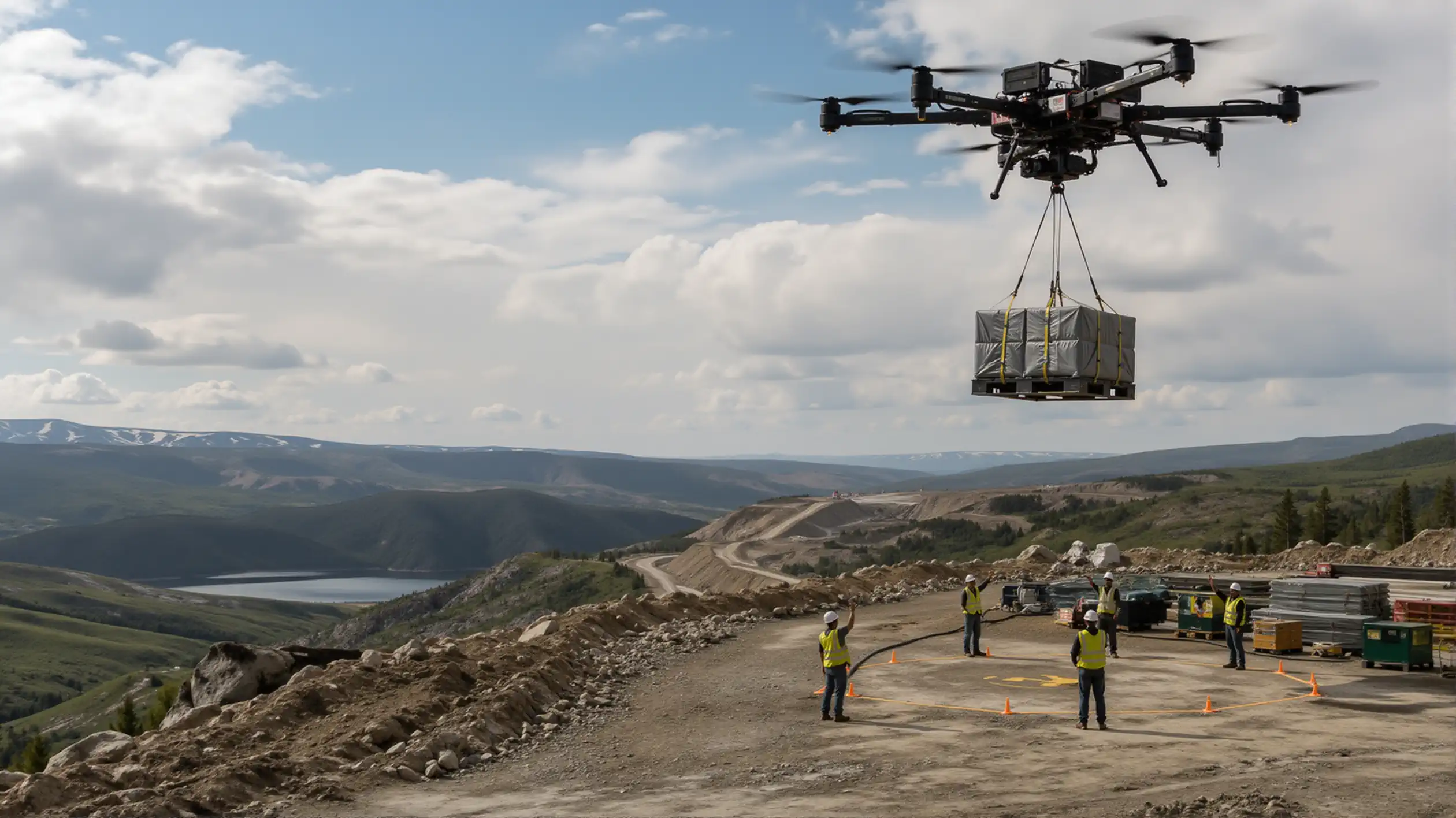
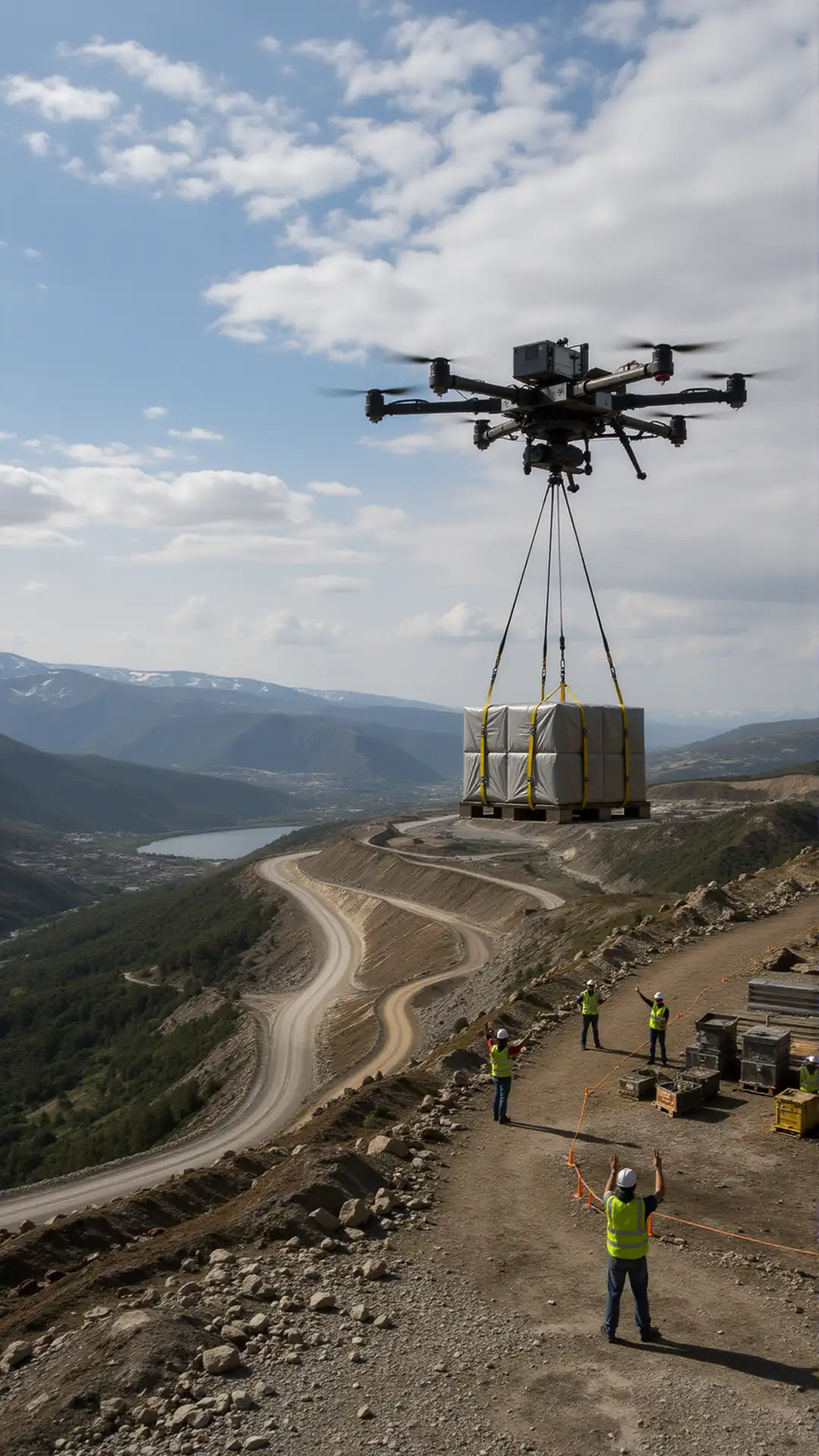
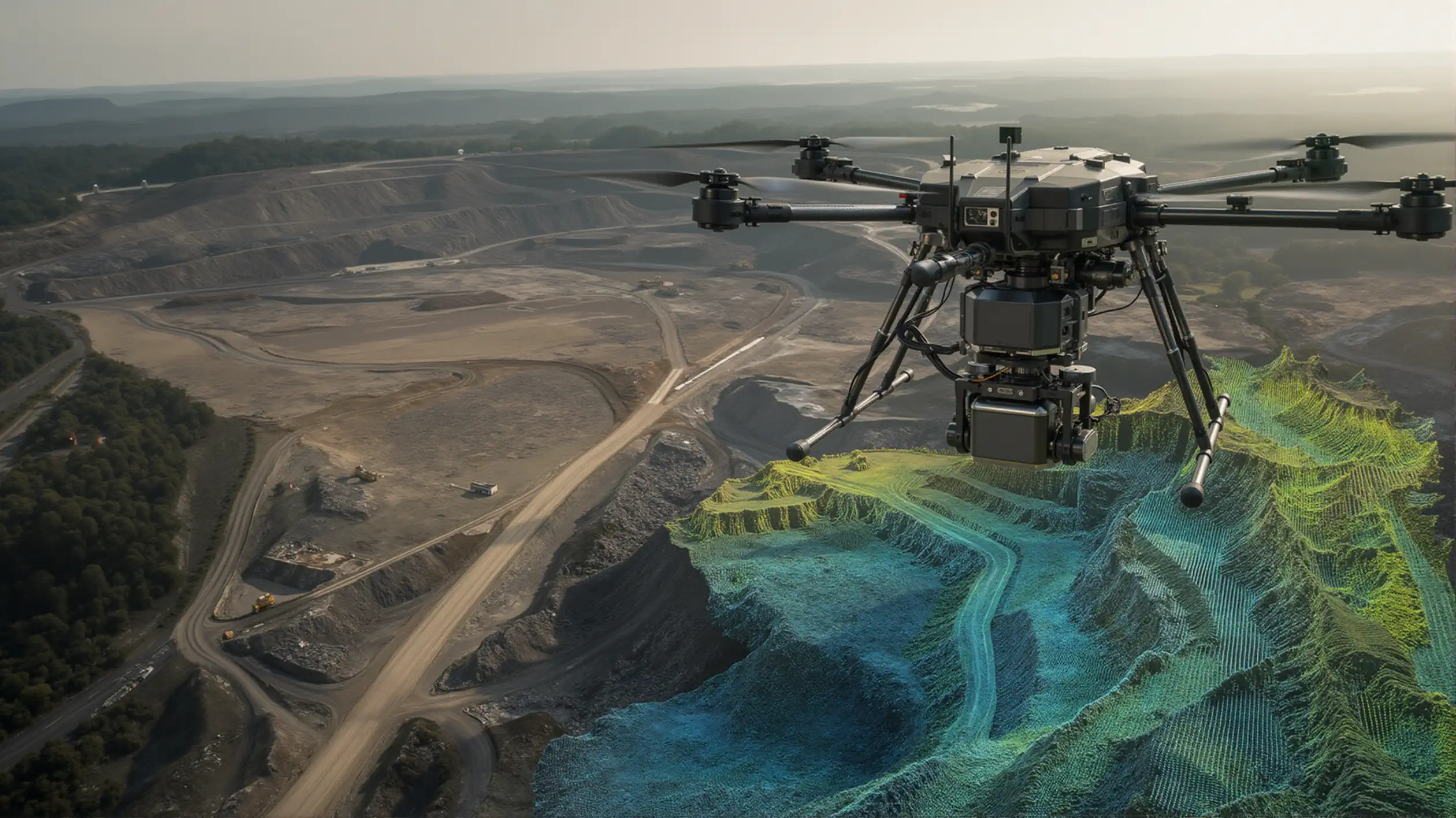
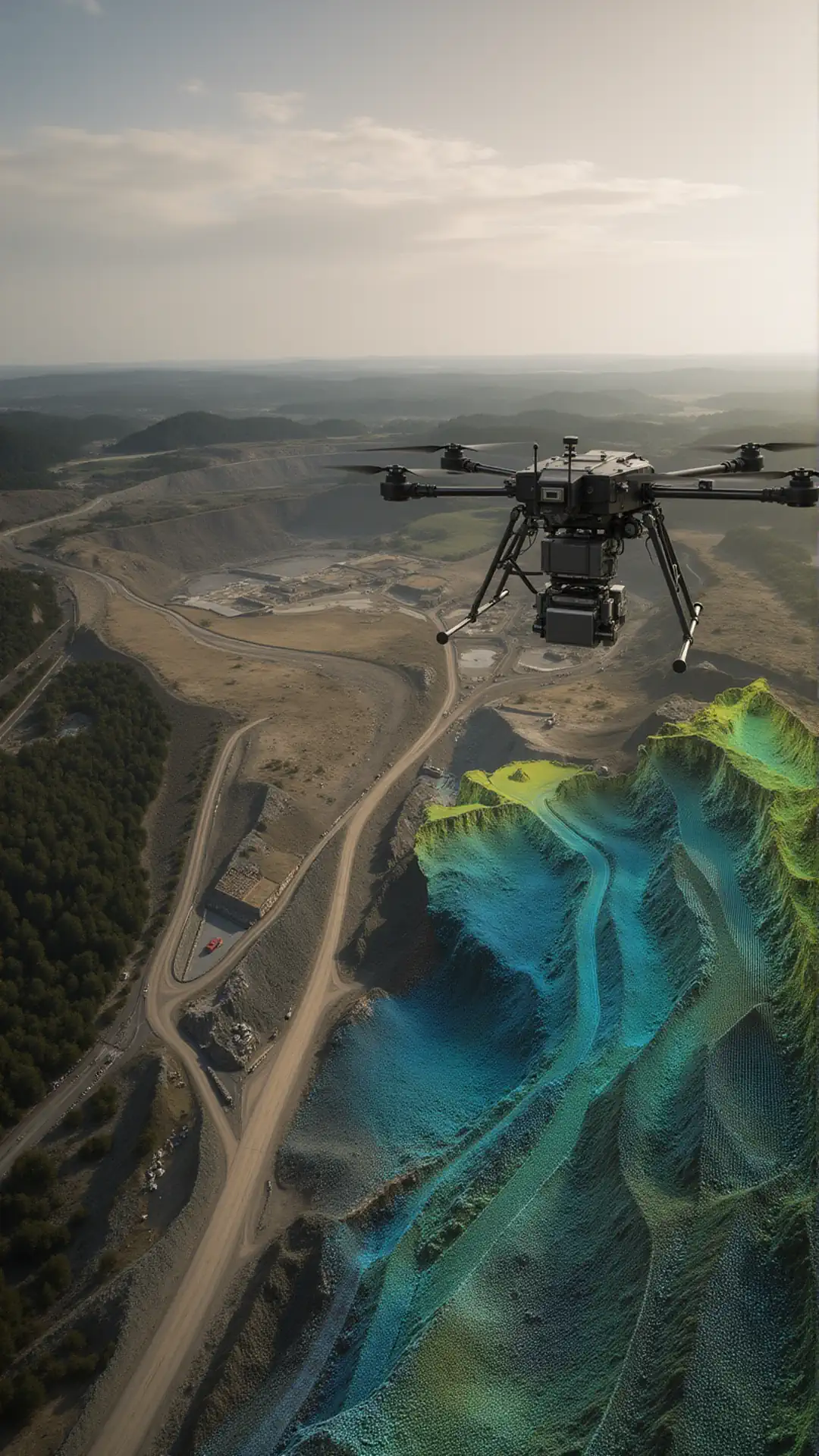
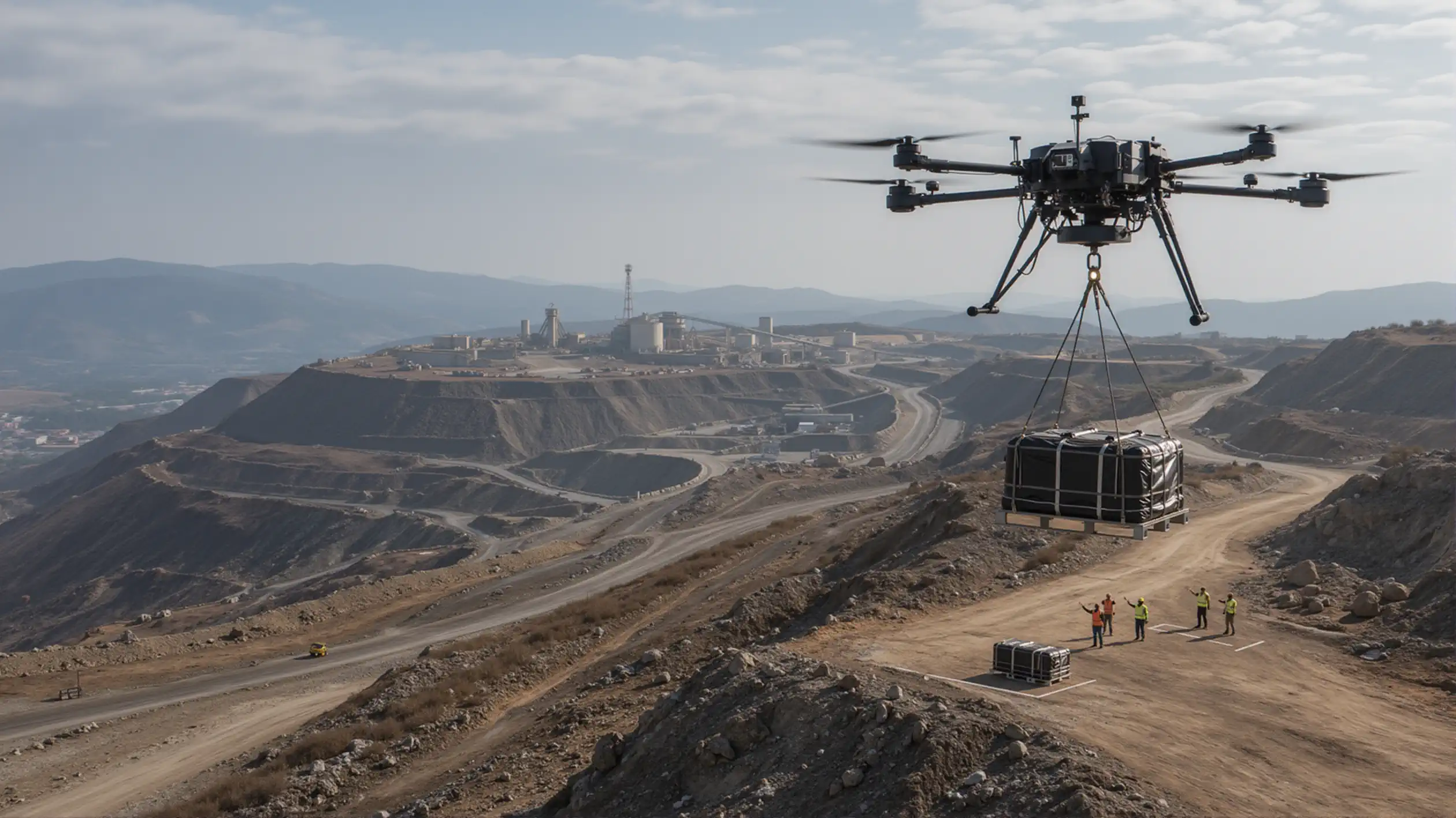
Remote-Site Equipment Delivery
A heavy-lift drone can move tools, replacement parts, packaged supplies, or other approved cargo between a controlled staging point and a location that is slow or difficult to reach by ground. The workflow includes weighing and securing the load, preparing launch and receiving zones, maintaining communication between both ends, and choosing whether the payload will be landed, lowered, or released.
Payload, Route, and Delivery Requirements
The buyer value comes from adding an aerial logistics option where terrain, temporary access problems, or long ground routes delay conventional transport. Selection should account for the complete load envelope, attachment method, wind exposure, route visibility, command-link coverage, delivery method, and interrupted-mission procedures. The intended cargo and operating site should be demonstrated before purchase rather than inferred from a generic lifting claim.
Construction Material Placement
On a controlled construction site, a heavy-lift UAV may position selected tools, rigging, components, or packaged materials where ground access is constrained. The operation coordinates the pilot, payload operator, spotters, rigging personnel, and receiving team. Loads must be prepared consistently, kept clear of obstacles, and transferred through a defined lifting corridor with protected takeoff and receiving areas.
Site Safety and Placement Requirements
This workflow can reduce some manual carrying or support short transfers in locations suited to aerial access, but it is not a general replacement for cranes or hoists. Buyers need to evaluate load stability, downwash, release hardware, precision near structures, crew visibility, exclusion zones, and interaction with other site equipment. Representative payload trials should confirm the full placement procedure and its practical limits.
Custom Industrial Payload Integration
Some industrial missions require a sensor, communications package, sampler, tool, or service device that is not available as a standard drone payload. An integrator evaluates the mechanical attachment, electrical power, data connections, balance, vibration, electromagnetic compatibility, operator controls, and safe failure behavior. The configuration then moves through bench checks, ground tests, controlled flights, and documented acceptance criteria.
Integration and Acceptance Requirements
A custom integration can place specialized equipment in the air while preserving a repeatable operating and data workflow. Buyers should not assume that lifting ability equals integration compatibility. Procurement should define engineering responsibility, interface documentation, test scope, software ownership, spare parts, maintenance needs, and the approval process for later changes to the aircraft or payload.
Industrial Sensor and Mapping Missions
A larger UAV may carry a survey, imaging, or geophysical payload when the sensor package, stabilization assembly, or supporting electronics exceed the practical envelope of smaller aircraft. The mission begins with the required deliverable and connects flight planning with sensor orientation, calibration, ground references, data capture, and processing. The crew must manage both aircraft operation and data-quality controls in the field.
Sensor Compatibility and Data Quality
The value lies in supporting specialized data collection as one complete industrial drone system rather than treating the aircraft and sensor as separate purchases. Important checks include payload compatibility, vibration isolation, calibration, georeferencing, storage, processing software, export requirements, and the expertise needed to interpret results. A heavier platform does not automatically improve data quality, so a representative dataset should be reviewed before purchase.
Emergency Logistics Support
During a controlled incident response, a heavy-lift drone may move approved equipment or supplies when access routes are disrupted or time-sensitive. The operation needs an incident command structure, assigned air and ground roles, verified loading procedures, protected launch and delivery areas, and coordination with other responders or aircraft. Missions should be predefined and rehearsed instead of improvised around an unfamiliar payload.
Deployment Readiness and Response Planning
The potential value is an additional logistics option when normal access is limited, but readiness depends on trained personnel, communications, weather, airspace conditions, maintenance, and reliable site information. Buyers should examine transportability, setup time, payload packaging, command-link coverage, redundancy, spares, and support availability. The organization also needs clear authorization, stop conditions, and a plan for maintaining proficiency between deployments.
Repetitive Internal-Site Cargo Movement
Large energy, mining, port, or industrial sites may evaluate heavy-lift drones for repeatable movement of standardized cargo between known points. The workflow uses defined packages, fixed staging areas, approved routes, predictable handoffs, and consistent preflight checks. Missions may be manually flown or supported by route automation, while trained personnel continue monitoring the aircraft, payload, operating area, and exceptions.
Operating Model and Business Case
Repeatable routes make utilization and process measurement easier, but the business case must include crew time, energy logistics, maintenance, weather downtime, payload preparation, and integration with site procedures. Buyers should compare aerial movement with existing vehicles and handling methods using representative operating cycles. A site study, communications assessment, safety review, and end-to-end trial should precede a purchase decision.
Frequently Asked Questions
How should we choose a heavy-lift drone for a specific payload?
Start with the actual payload rather than an advertised lifting figure. Document its mass, dimensions, center of gravity, mounting points, power and data needs, and the intended flight profile. The supplier or integrator should evaluate the complete aircraft-payload configuration and demonstrate it under conditions representative of the planned work.
Can a heavy-lift UAV carry our existing sensor, tool, or cargo mechanism?
Possibly, but physical lifting ability does not confirm compatibility. A proper integration review should cover the mounting structure, balance, vibration, electrical interfaces, communications, operator controls, and safe behavior if a component or link fails. Custom hardware should be tested and documented before routine field use.
What software is needed for heavy-lift drone operations?
The software depends on the mission. Common needs include route planning, aircraft and payload control, telemetry, flight records, maintenance tracking, and job reporting. Buyers should confirm which functions are integrated, what data can be exported, who can access it, and how the workflow behaves when connectivity is limited.
What site conditions can limit a heavy-lift mission?
Wind, weather, obstacles, command-link coverage, takeoff and landing space, loose material, ground access, and the ability to maintain a controlled operating area can all affect deployment. The complete mission should be assessed at the intended site because a larger aircraft and external load may require more space and crew coordination than a smaller commercial drone.
What should be included in a supplier demonstration?
A useful demonstration should use the real payload or a representative engineering equivalent and follow the intended workflow from transport and setup through loading, flight, payload action, recovery, and postflight checks. Agree on acceptance criteria beforehand so the team can evaluate integration, crew workload, data or delivery results, and contingency procedures consistently.
What support should we plan for after purchase?
Plan for mission-specific training and support, integration documentation, inspection and maintenance procedures, spare parts, software onboarding, troubleshooting, and controlled configuration changes. Clarify which organization supports the aircraft, payload, mounting hardware, and software so that technical responsibility does not fall into gaps between multiple vendors.
Heavy-Lift Drones for Industrial Payload Operations
Heavy-lift drones are considered when a business needs to carry cargo, equipment, or a custom payload that is impractical for a typical commercial multirotor. The useful capability is not defined by the aircraft alone. It comes from the combination of airframe, payload, mounting hardware, controls, crew, site procedures, and technical support.
A heavy lift UAV should therefore be selected against a documented mission rather than a single advertised figure. Two platforms that appear similar may support different payload interfaces, operating methods, transport needs, software, and maintenance models. A clear mission profile gives buyers a consistent basis for comparing proposed systems.
Define the Payload Before Comparing Platforms
The payload definition should include its actual mass, dimensions, shape, center of gravity, mounting points, fragility, and environmental limits. A fixed cargo box, suspended load, stabilized sensor, powered tool, and controlled release mechanism each affect the aircraft differently. If equipment needs electrical power, commands, telemetry, or data recording, those interfaces must be included from the beginning.
The operating method matters just as much. Determine whether the aircraft will take off and land with the payload, lower it on a line, place it on a surface, or activate a release. Identify who prepares and receives the load, how people remain clear, and what happens if the destination becomes unavailable. These decisions influence ground clearance, landing gear, attachment design, operator visibility, and crew coordination.
Evaluate the Complete Field Workflow
The system review should cover the aircraft, propulsion and energy source, command link, ground control equipment, payload hardware, software, transport cases, charging or fueling process, tools, spares, and documentation. Every element must fit the conditions in which the mission will be performed. A demonstration at an open field does not automatically prove that the same configuration will work at a confined industrial site.
Field logistics often determine whether a system is practical. Buyers should examine transport, assembly, loading, launch and recovery areas, rotor wash, obstacles, site access, energy management, and postflight inspections. The crew model also needs to be defined. Depending on the task, the operation may require a pilot, payload operator, observers, rigging personnel, and staff at the receiving point, with clear communication and stop procedures.
Treat Custom Equipment as an Engineering Integration
Custom payload work creates risk when responsibilities are unclear. The mount must handle expected loads without unacceptable movement or vibration. Electrical and data connections need protection, predictable behavior, and a defined response to faults or lost communication. Integration should progress through requirements, interface design, bench testing, fit checks, ground operation, controlled flight tests, and a representative mission trial.
Acceptance criteria should cover both aircraft behavior and payload performance. The approved configuration, software versions, limitations, inspection points, and maintenance actions should be documented for field crews. Later changes to a bracket, sensor, equipment position, or control software may affect balance, interference, data quality, or handling, so procurement documents should define who can approve modifications and what retesting is required.
Connect Mission Software With Operational Records
Mission planning may define routes and boundaries, payload controls may operate equipment, flight logs may document aircraft events, and fleet tools may track inspections and maintenance. Buyers should map how information moves from planning through field execution to the final job record. The interface shown in a demonstration matters less than whether the data supports the organization’s actual reporting process.
For sensor missions, review calibration, storage, processing, quality control, export, backup, and delivery. For logistics missions, the important record may be a delivery event, chain of custody, exception report, or configuration history. Confirm data ownership, user permissions, export formats, connectivity assumptions, retention needs, and the behavior of the workflow when a network connection is unavailable.
Validate the System Before Purchase
A useful buying decision should end with a controlled trial based on the proposed workflow. Use the real payload when practical or an engineering equivalent that represents its mass, dimensions, mounting, and interfaces. Run through transport, setup, loading, preflight, mission execution, payload action, recovery, postflight inspection, and data or delivery confirmation while observing crew workload and turnaround steps.
Define success criteria before the trial. These may address integration stability, control workflow, placement or delivery method, data completeness, setup complexity, maintenance access, and contingency procedures. The right system is the supported configuration that matches the payload, can be deployed by the available crew, fits the site and information workflow, and has documented operating boundaries. This provides a stronger basis for procurement than any isolated lifting claim.g, corridor mapping, or industrial asset modeling, the goal is to match the system to the required data quality, operating environment, and daily production needs. A correctly selected LiDAR scanner drone should deliver usable project data—not simply complete a flight.