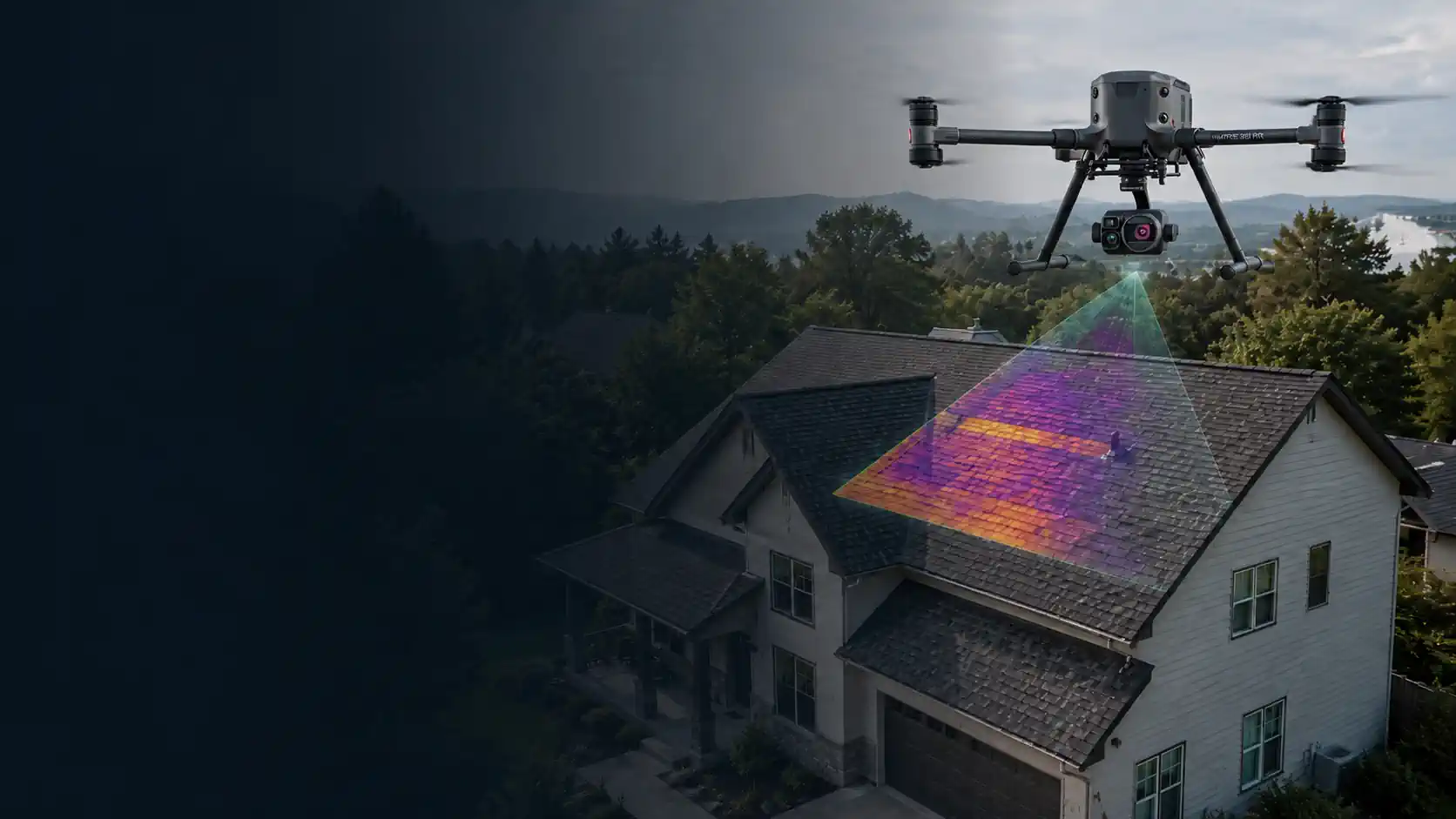
Thermal Roof Inspection Drones
Find a ready-to-deploy thermal drone system for roof anomaly detection, RGB documentation, and detailed post-flight analysis.
Select the Right Drone System
Describe what you need the drone system to do, or use our guided selector.
Loading selector...
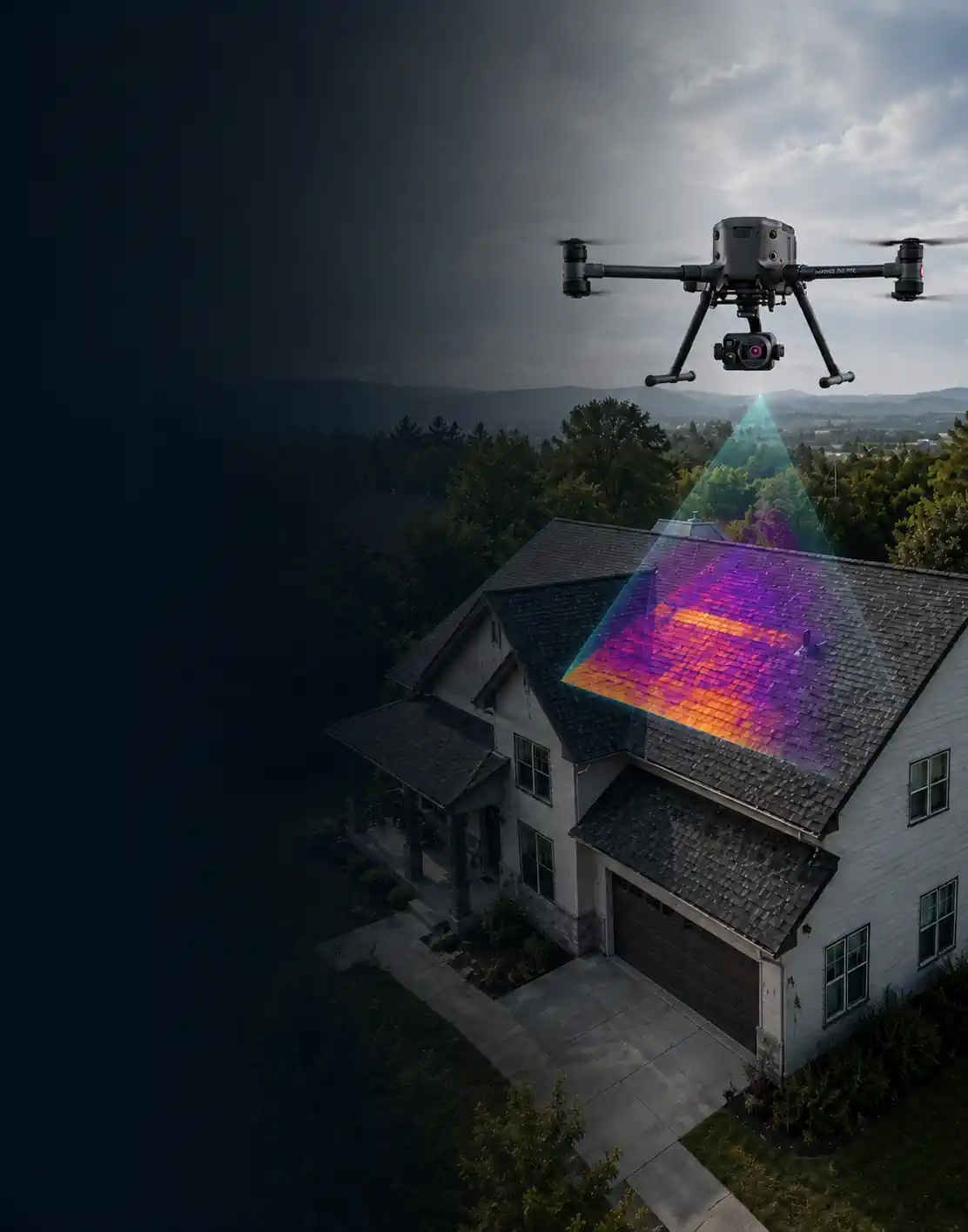
Thermal Roof Inspection Drones
Find a ready-to-deploy thermal drone system for roof anomaly detection, RGB documentation, and detailed post-flight analysis.
Select the Right Drone System
Describe what you need the drone system to do, or use our guided selector.
Loading selector...
Choose a Thermal Drone Based on the Inspection Objective
Thermal roof inspection drones should be selected around the result the operator needs to collect and deliver. A system used for a general overview of temperature patterns does not require the same payload, flight workflow, or analysis capabilities as one used for detailed radiometric review and repeatable commercial inspections.
Read More About Thermal Roof Inspection Drones
Depending on the inspection objective, the system may need to support:
- General identification of surface temperature anomalies
- Documentation of areas that require further investigation
- Synchronized or coordinated RGB and thermal capture
- Radiometric data for post-flight temperature analysis
- Controlled manual inspection of smaller roofs
- Systematic coverage of large commercial roofs
- Repeatable capture for recurring inspection programs
A temperature anomaly does not by itself confirm moisture, insulation failure, or another roof defect. The usable result depends on the roof assembly, environmental conditions, capture method, sensor capability, and professional interpretation.
Thermal Resolution, Detail, and Operating Distance
Thermal resolution affects how much spatial detail the sensor can record, but it cannot be evaluated separately from the inspection conditions. The size of the anomaly, total roof area, flight altitude, operating distance, lens field of view, and environmental conditions all influence whether a temperature pattern can be distinguished in the captured image.
As operating distance or altitude increases, each part of the thermal image generally represents a larger roof area. This may be practical for broad coverage but can make smaller patterns more difficult to distinguish. Flying closer may improve the amount of detail captured, provided the site, roof geometry, obstacles, and operating conditions allow it.
The sensor’s stated resolution alone does not guarantee a useful result. Lens characteristics, focus, image stabilization, thermal sensitivity, viewing angle, roof materials, weather, capture timing, and the operator’s methodology can all affect the final data. Buyers should evaluate the complete capture workflow against the type and scale of anomaly the inspection is intended to document.
Radiometric and Non-Radiometric Thermal Workflows
Standard thermal images and video display temperature patterns that can be reviewed visually. They may be sufficient when the objective is to identify areas of interest, document general patterns, or determine where additional investigation may be appropriate.
Radiometric imagery retains temperature information associated with the captured data. Where supported by the payload and file format, compatible software may allow the operator to examine temperature values, adjust how the thermal data is displayed, add annotations, and review the imagery after the flight.
Radiometric capability can support more detailed analysis and reporting, but it is not necessary for every thermal roof inspection. The requirement depends on whether the deliverable calls for a visual thermal overview or a post-flight workflow using retained temperature data.
In either workflow, data collection, data analysis, and the final professional conclusion are separate stages. Thermal imagery must still be interpreted in the context of the roof construction, inspection conditions, visible evidence, and any required follow-up testing.
Visible and Thermal Cameras Should Work Together
A visible camera provides the visual context needed to locate and document a thermal pattern. RGB imagery can show roof sections, seams, flashing, penetrations, drainage features, surface deterioration, mechanical equipment, and other visible conditions near an area of interest.
Comparing thermal and visible images can help an inspector:
- Associate an anomaly with a specific roof location
- Document the visible condition of the roof covering
- Compare temperature patterns with observable features
- Prepare reports that are easier for clients and contractors to understand
- Separate a thermal pattern from visible damage or another apparent surface condition
A combined RGB and thermal payload can simplify coordinated capture, but it is not automatically better than using separate cameras. The appropriate configuration depends on image requirements, payload capability, flight workflow, data alignment, and how the results will be reviewed.
Inspection Timing and Environmental Conditions
Thermal roof inspection results depend heavily on the conditions under which the data is collected. Solar loading, ambient temperature, wind, recent rain, roof materials, insulation, HVAC equipment, shadows, and inspection timing can all influence surface temperature patterns.
Solar exposure can create or strengthen temperature differences across a roof, while shadows, wind, or changing cloud cover can produce uneven conditions. Recent rain may alter the thermal behavior of the roof and can also affect whether a flight should proceed. HVAC equipment, vents, interior heat sources, and differences in insulation may create patterns unrelated to a roof leak.
Different roofing materials and assemblies heat and cool at different rates. The appropriate inspection window therefore depends on the roof, weather history, inspection objective, and methodology. A technically capable thermal camera cannot compensate for unsuitable collection conditions or an incorrectly planned inspection.
Small Roofs and Large Commercial Roofs
Small residential or low-area roofs may favor a portable system with quick setup, responsive manual control, and straightforward data transfer. Controlled positioning allows the operator to adjust distance and viewing angle around individual roof sections, penetrations, edges, and other areas requiring closer review.
Large commercial roofs create a different thermal workflow. Systematic coverage, battery rotation, mission planning, repeatable routes, and a reliable method for tracking captured areas may become more important as the roof area and data volume increase.
Commercial inspections may also require coordinated RGB and thermal capture, consistent flight parameters, organized file storage, and software that can handle larger datasets. If the same property will be inspected repeatedly, a reproducible mission and data-management process may be more valuable than maximum aircraft performance alone.
Thermal Roof Inspection Drone Software
Thermal roof inspection drone software connects captured data with review, analysis, documentation, and reporting. The required functions depend on the payload and the intended deliverable.
A compatible workflow may support:
- Review of thermal images and video
- Radiometric analysis where the payload and files support it
- Comparison of RGB and thermal imagery
- Annotations and identification of areas requiring further investigation
- Preparation of inspection documentation and reports
- Export of images, data, and supporting records
- Preservation and use of relevant payload metadata
Compatibility should be confirmed before purchase. Buyers need to know which files the payload records, whether temperature data is retained, what metadata is available, which processing steps are required, and whether the output fits their existing reporting process. A capable sensor can still create an inefficient workflow if its data cannot be reviewed or exported as required.
Complete Thermal Roof Inspection Drone Systems
A complete thermal roof inspection configuration may include more than the aircraft and camera. Depending on the selected system and supplier, the package may include:
- Drone platform
- Thermal or dual-sensor payload
- Controller and operator display
- Flight batteries and charging equipment
- Mission-planning tools
- Compatible thermal analysis or reporting software
- Data storage and transport equipment
- Initial setup and configuration
- Operator or workflow training
- Warranty and manufacturer support
The exact contents should be confirmed for each configuration. Software licenses, analysis capabilities, batteries, accessories, training, warranty terms, and support coverage should not be assumed from the aircraft or payload specification alone.
Find the Right Thermal Roof Inspection System
The right system depends on the roof size, inspection objective, required thermal detail, practical operating distance, RGB requirements, radiometric requirements, mission type, and software workflow. These factors should be evaluated as one working configuration rather than as separate aircraft and camera specifications.
If the job also includes visible damage documentation, measurements, or other non-thermal workflows, compare the broader selection of roof inspection drones.
Frequently Asked Questions
What is the best thermal drone for roof inspections?
There is no single best system for every roof. The appropriate choice depends on roof size, inspection objective, required thermal detail, operating distance, RGB capture, radiometric needs, flight workflow, and compatible analysis software.
Does a thermal drone detect roof leaks?
A thermal drone records surface temperature patterns; it does not see water or confirm a leak. Some anomalies may justify further investigation, but their cause must be evaluated using the roof construction, inspection conditions, visible evidence, and any necessary follow-up testing.
Is radiometric thermal imaging necessary for roof inspections?
Not for every inspection. Standard thermal imagery may be sufficient for a general visual overview. Radiometric data is more relevant when the workflow requires retained temperature information and detailed post-flight analysis.
Can thermal roof inspections be performed in any weather?
No. Wind, rain, solar loading, ambient temperature, cloud cover, shadows, and recent weather can affect both flight operations and the usefulness of the thermal data. Conditions should be evaluated for the specific roof and inspection objective.
Do thermal roof inspection drones also need visible cameras?
A visible camera is not required for every thermal capture, but it provides valuable location and surface context. RGB imagery can make it easier to relate a temperature pattern to a roof section and prepare clear inspection documentation.
What is included in a complete thermal roof inspection drone system?
A configuration may include the drone, thermal or dual-sensor payload, controller, batteries, charger, compatible software, storage and transport equipment, setup, training, warranty, and support. The exact package must be confirmed before purchase.